

THE FOUNDATION
Interactive installations and immersive experiences for events, trade shows and museums.
An interactive installation combines digital content, software and physical space so the audience can participate instead of simply watching a video.
It can use touchscreens, sensors, projection, gamification, VR or AR. Loto Studios develops the concept, 3D content and applications, and coordinates requirements with the hardware supplier when the project needs LED walls, projectors, structures or specialist sensors.
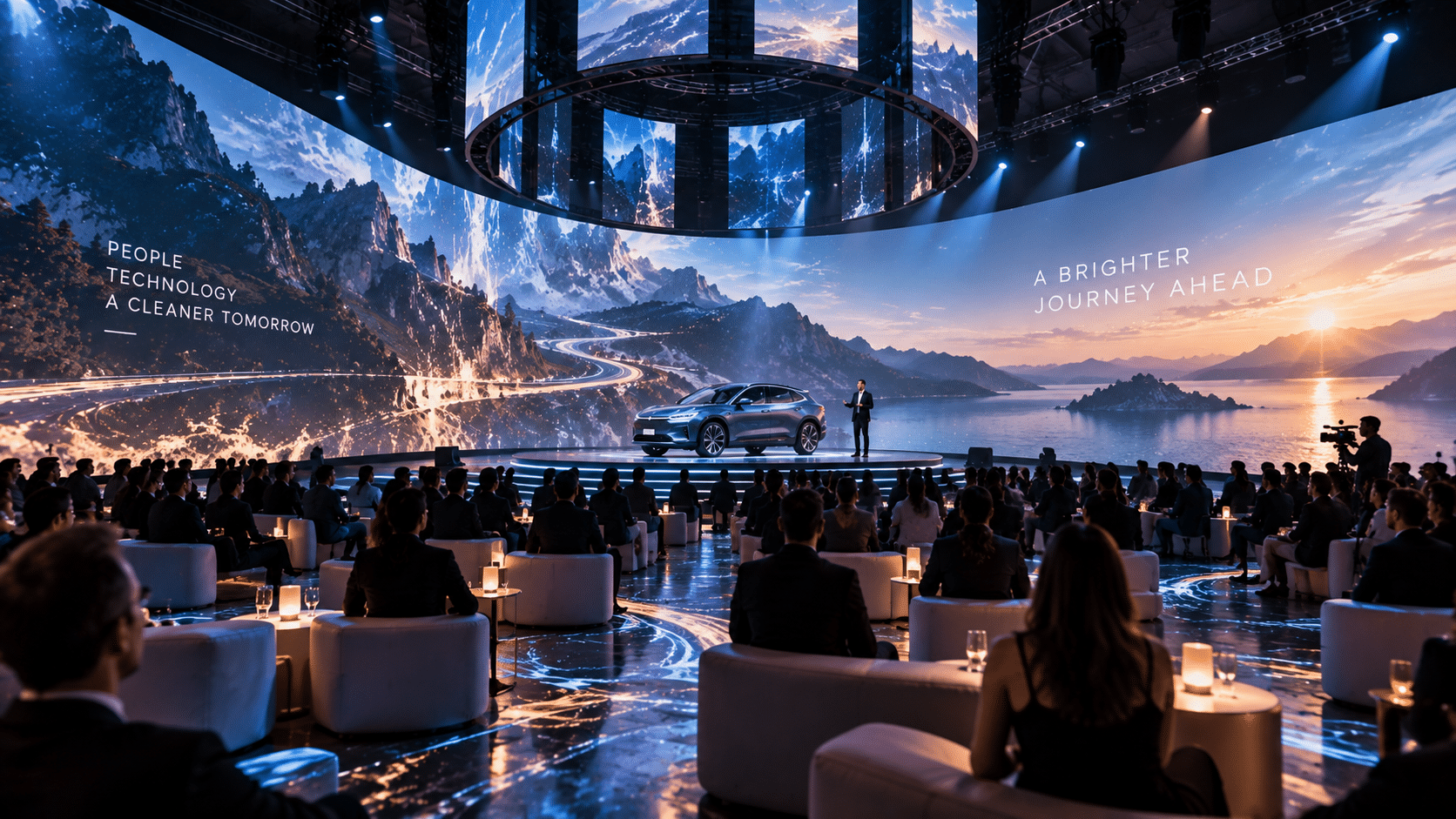
REAL-WORLD APPLICATIONS
When to choose an interactive installation — and when not to.
We start from audience behavior, not technology. If people need to participate, move or share an experience in the space, an installation can make sense. If they only need to watch or use an interface, simpler formats may be more effective.
It makes sense when the audience needs to…
Gamification, voting, touchscreens and connected devices work when the audience needs to make decisions, compete or trigger content during an event.
Exhibitions, museums and immersive rooms work when the space, projection, audio and visitor journey are part of the narrative rather than simple scenery.
Leaderboards, game shows and multi-device interactions suit conventions and trade shows with groups, rounds and continuous participant flow.
Videomapping and site-specific installations become useful when geometry, surfaces, resolution and audience position shape the content itself.
Choose another format when the real need is…
WHAT WE BUILD
Experiences designed around audience behavior.
We do not start from the technology. We start from what needs to happen in the space: watching, choosing, collaborating, competing or exploring.
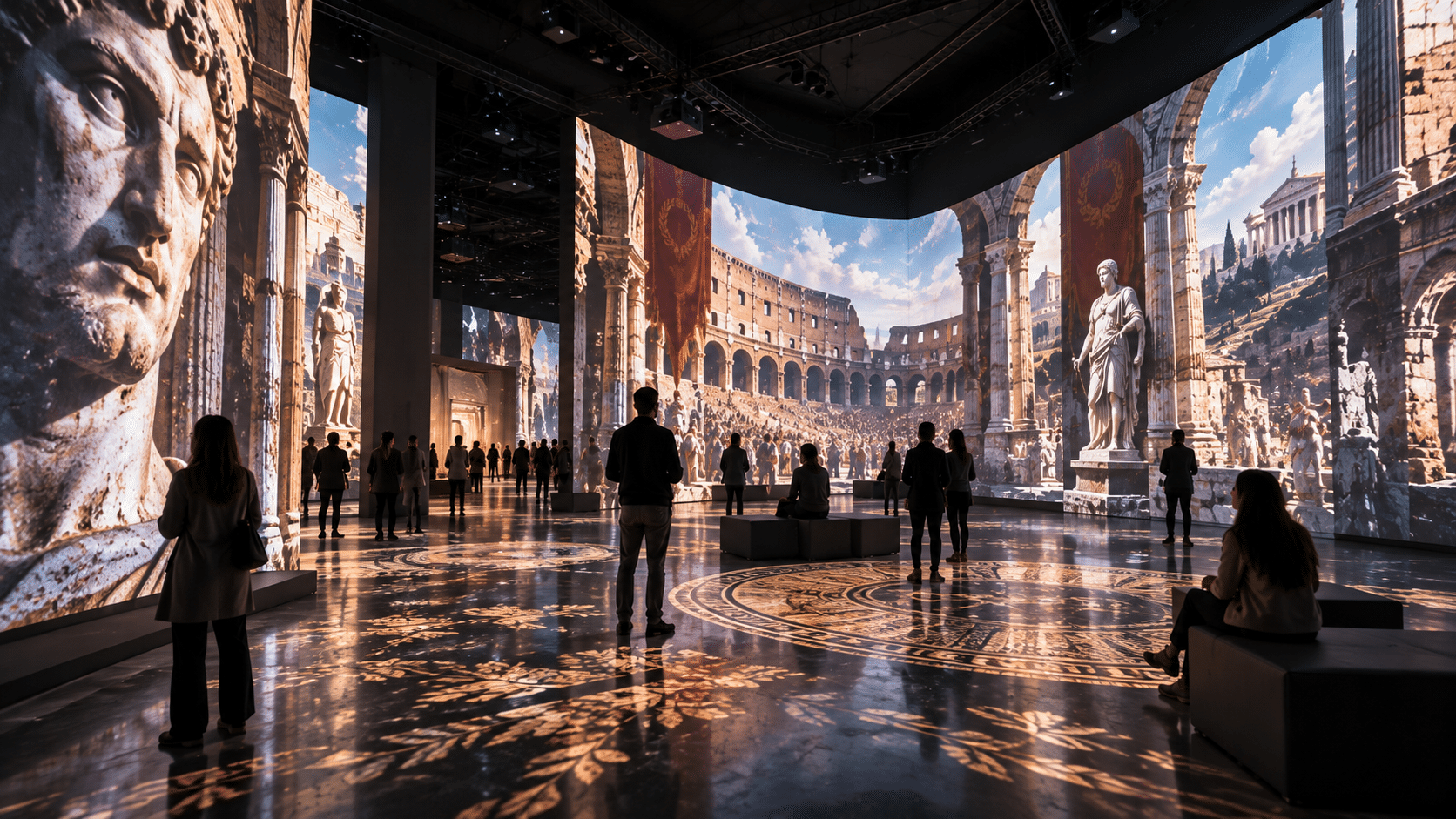
Immersive exhibitions
Exhibition journeys with projection, 3D content, audio and spatial storytelling. Rhythm and focal points are designed around the actual venue and visitor flow.
Corporate events and brand activations
Conventions, product launches and booths where content and software need to react to the audience while remaining manageable throughout the event day.
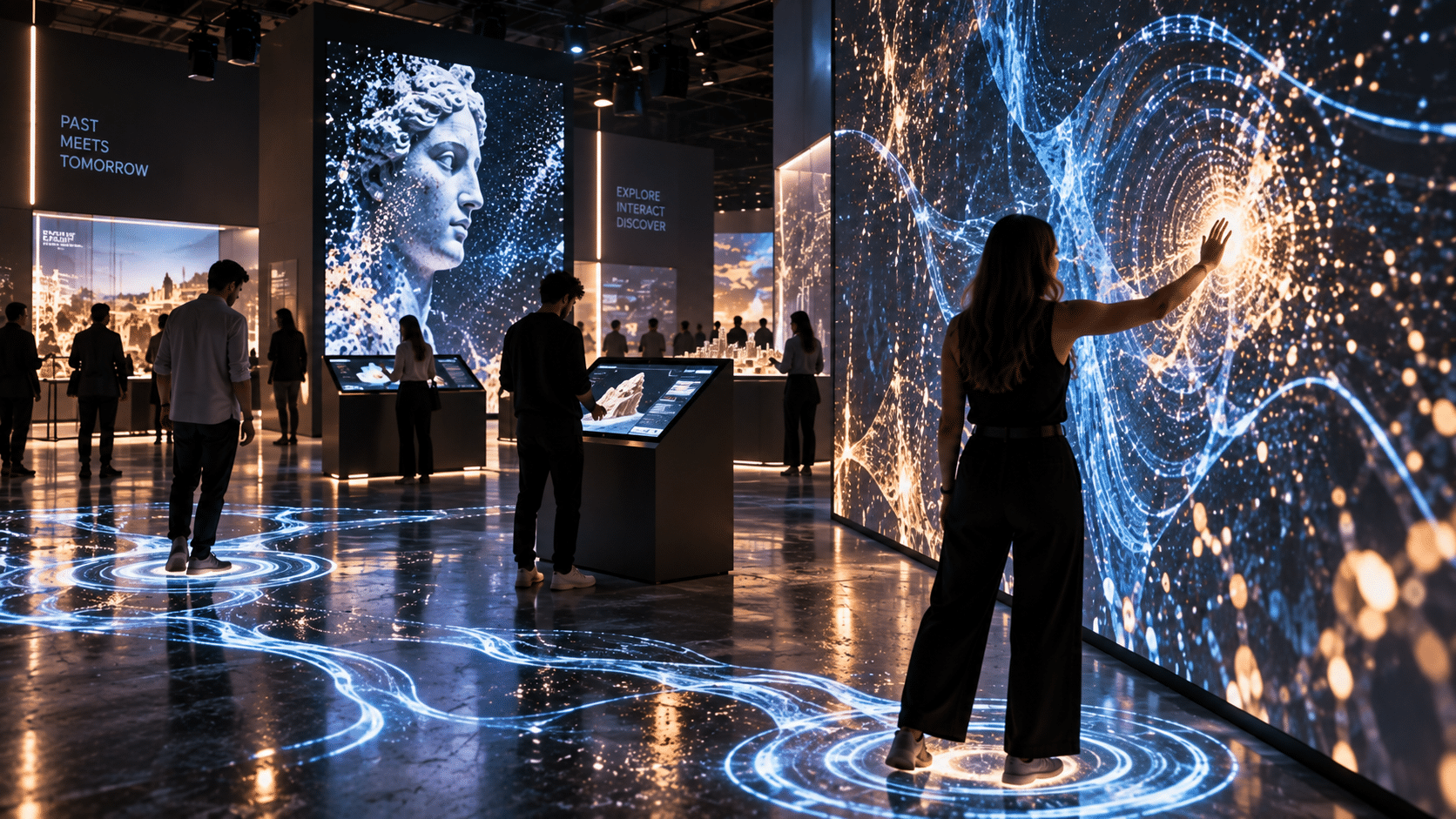
Interactive installations
Touchscreens, sensors, cameras and connected devices designed around viewing distance, dwell time and how people behave in the space.
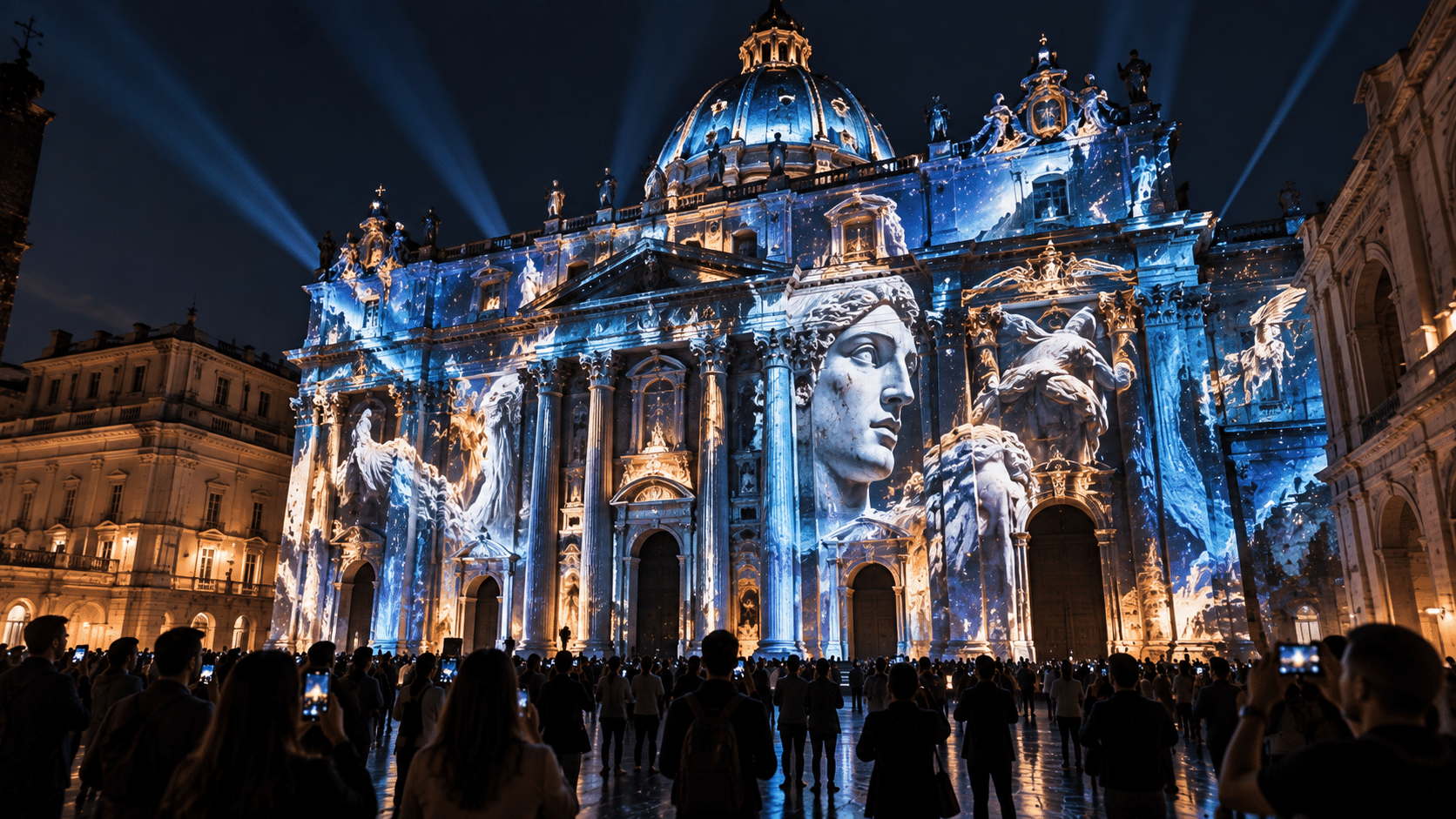
Videomapping and projection
Content built around the dimensions of façades, sets and physical surfaces to preserve proportion, readability and continuity in the real installation. See Vette e Onde for an example of content designed for an immersive space.
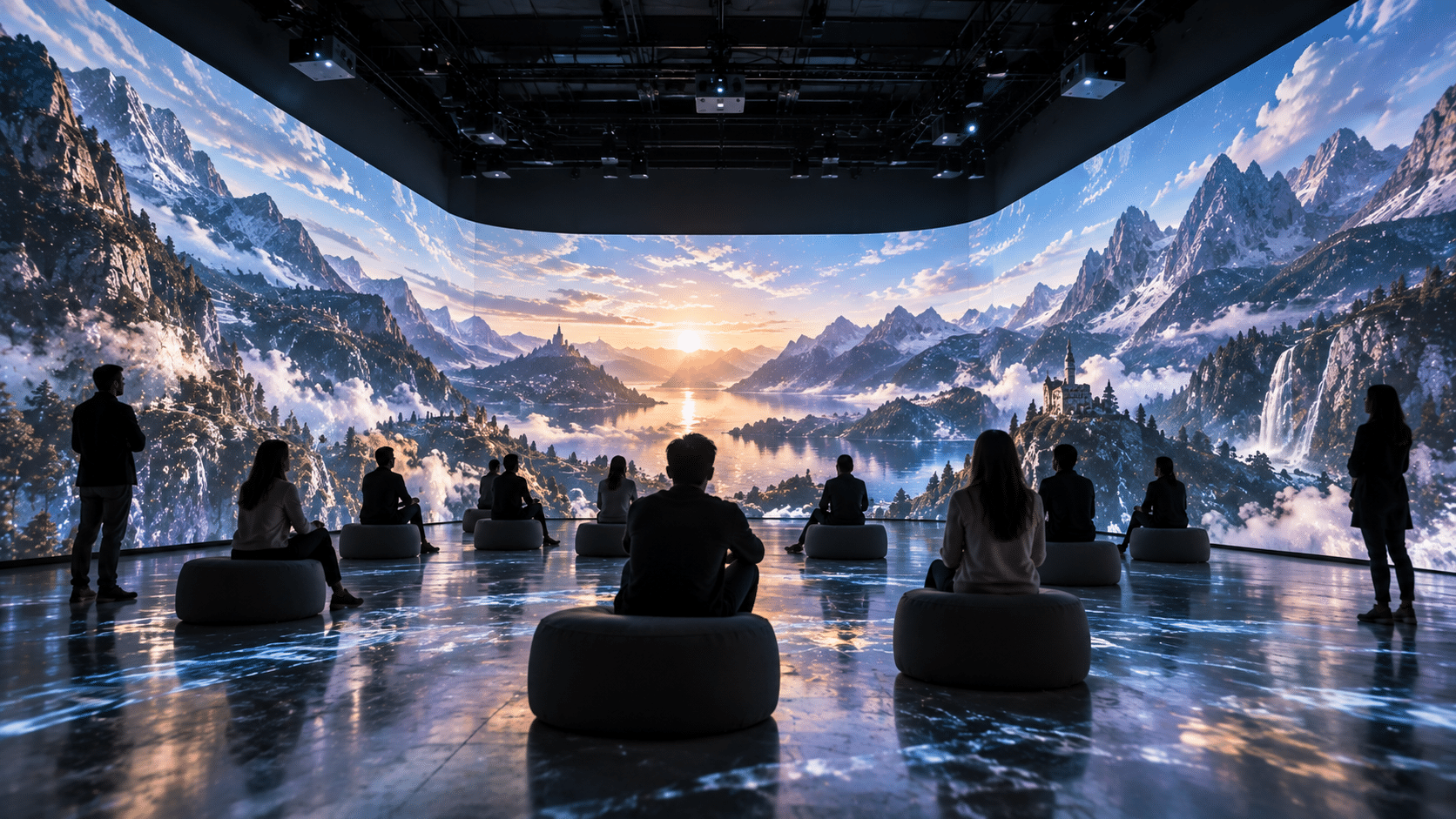
Immersive rooms
Multiple synchronized walls or surfaces that create a continuous visual environment. Resolution, perspective, audio and audience position are treated as one system. See Vette e Onde for an example of content designed for an immersive space.
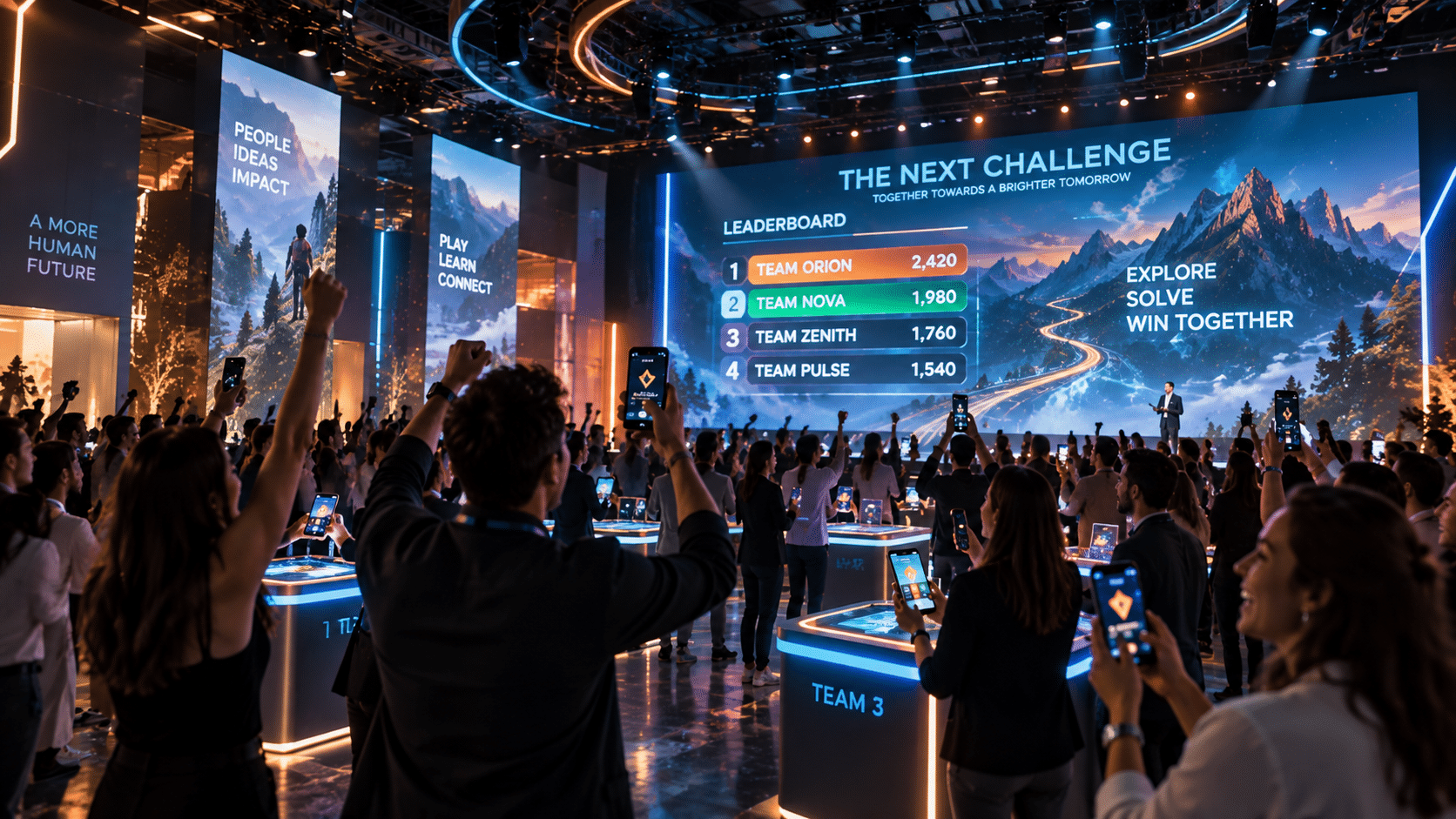
Event gamification
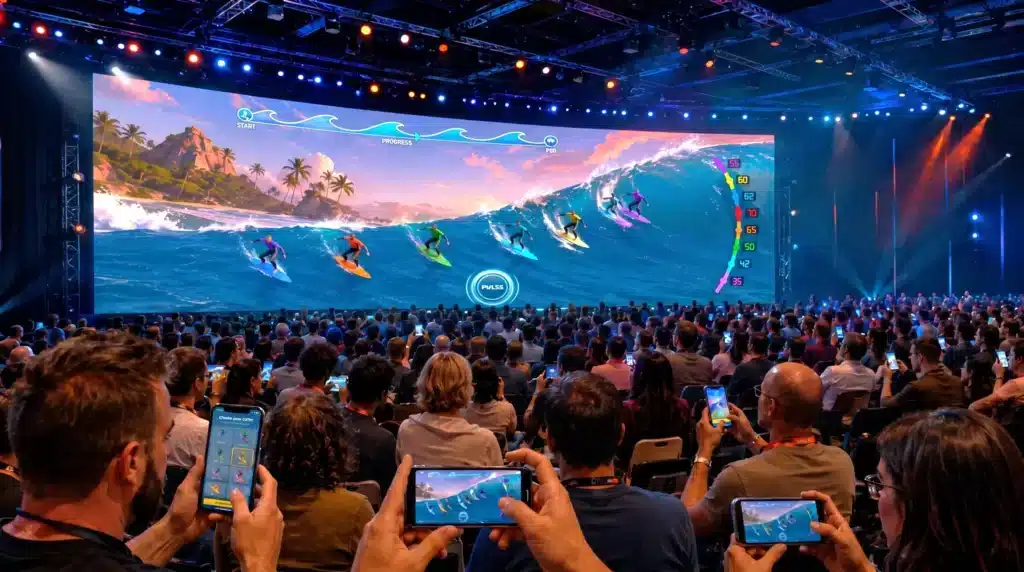
Quizzes, leaderboards, game shows and connected devices to engage groups and display results in real time on large screens. Explore The Game Show, a group gamification project.
CHOOSING THE FORMAT
Goal, audience and flow determine the technology.
This matrix prevents projects from starting with “we want an LED wall” when the real need may be a game, an interface, an immersive room or an individual VR experience.
| Goal | Format to consider | When it works best |
|---|---|---|
| Engage groups and create competition | Gamification / Game Show | Conventions, trade shows, team events and brand activations with multiple participants and shared results. |
| Let people explore content and products | Touchscreen / interactive installation | When the user needs to choose what to explore and the software is the center of the experience. |
| Surround the audience with content | Immersive room / multi-projection | When walls, audio and visitor position need to create one continuous scene. |
| Tie content to real-world geometry | Videomapping | Façades, sets and surfaces where the content must follow real dimensions and physical perspective. |
| Bring each person into a digital scenario | Virtual Reality | When the experience is individual or for small groups and the headset is essential to the project. |
WHAT WE DELIVER
Content and software ready for the real setup.
We define formats, resolutions, loops, synchronization, interaction logic and fallback behavior for unavailable networks or devices.
The project is delivered with clear technical requirements for the event supplier: surfaces, inputs/outputs, resolutions, computers, sensors and test conditions. This keeps content, software and hardware aligned when the setup reaches final testing.
WHO DOES WHAT
Content and software on one side. Hardware and physical setup on the other.
Separating responsibilities prevents one of the most common problems in digital events: discovering during setup that content, software and the physical system were not designed together.
What Loto Studios can provide
The project scope is defined in the quotation and can include:
- installation concept and user experience;
- 3D content, video, motion and AI;
- applications, gamification and control logic;
- interfaces for touchscreens, devices and sensors;
- technical specifications, testing and commissioning support.
What is coordinated with the event supplier
When the project requires physical infrastructure, we work with the technical supplier or the client’s chosen vendor for:
- LED walls, projectors and audio systems;
- structures, cabling and power;
- computers, media servers and onsite networking;
- sensors and specialist hardware;
- installation, safety and onsite technical support.
OUR PROCESS
From the real space to onsite testing.
Each phase closes a concrete decision before costs and technical dependencies increase.

Space, audience and goal
We collect floor plans, dimensions, event date, expected flow, surfaces and available infrastructure. We define what the audience needs to do, not only what they need to see.
01

Concept and prototype
We build storyboards, interactions and a prototype to validate pace, participation and hardware dependencies before final production.
02

Production and integration
We produce content and software, prepare formats and interfaces, and share specifications with technical suppliers and installers.
03

Testing and activation
We verify outputs, networking, devices, fallback behavior and real-world performance in the venue or on an equivalent setup before opening to the public.
04
TECHNOLOGY AND CONTROL
Installations fail in the details you cannot see in the render.
Resolution, networking, response time, synchronization and fallback are as much a part of the experience as the visuals.
Resolutions and surfaces
Content and interfaces are produced for the actual setup dimensions. Aspect ratio, pixel mapping and audience position are defined before the final master.
Network, devices and fallback
When the experience depends on networking, sensors or connected devices, we define offline behavior, recovery and continuity modes consistent with the chosen architecture.
Audience flow
A three-minute session for one person and a convention with continuous groups require different systems. Throughput is considered from the concept stage.
QUOTATION
Do you have a space or event to turn into an experience?
Tell us the date, venue, audience, surfaces and hardware already available. We help choose the right format and separate content, software and technical supply before changes become expensive.
PRICING AND TIMELINES
How much an interactive event experience costs.
The ranges below refer to content and software. Hardware, structures, transport, installation and technical services are quoted separately when they are not part of Loto Studios’ scope.
| Experience type | Indicative price | Indicative delivery | Quote |
|---|---|---|---|
| Gamification / basic interactive activation | From €2,000 | Defined after the brief | Request a quote |
| Single-event application | From €3,000 | Defined after the brief | Request a quote |
| Multi-event platform | From €6,000 | Defined after the brief | Request a quote |
| Immersive experience with custom content/software | From €7,500 | Defined after the brief | Request a quote |
The quotation depends mainly on the amount of content, interaction logic, devices, surfaces, live control requirements and the level of reuse across multiple events.
ONE-OFF OR REUSABLE?
A one-off project and a reusable platform are not designed in the same way.
Deciding early whether the experience will run for one day or become a reusable format avoids paying twice for architecture, content and interface work.
SINGLE EVENT
One-off
Best when:the date, venue and content are unique and production speed matters more than configurability.
The priority is operational simplicity, stability and fast setup.
EVOLVING FORMAT
Reusable platform
Best when:the experience needs to return across different trade shows, venues or conventions, while content, questions, branding or languages may change.
More is invested in the initial architecture to reduce later adaptations.
WHICH SOLUTION IS RIGHT?
Installation, application or VR?
The right technology depends on where the audience is and how much the physical space needs to shape the experience.
PHYSICAL SPACE
Immersive installation
When screens, projections, software and the venue need to work as one system for an audience sharing the same physical space.
INTERFACE
Interactive application
When the center of the project is software on a browser or touchscreen and an immersive physical setup is not necessary.
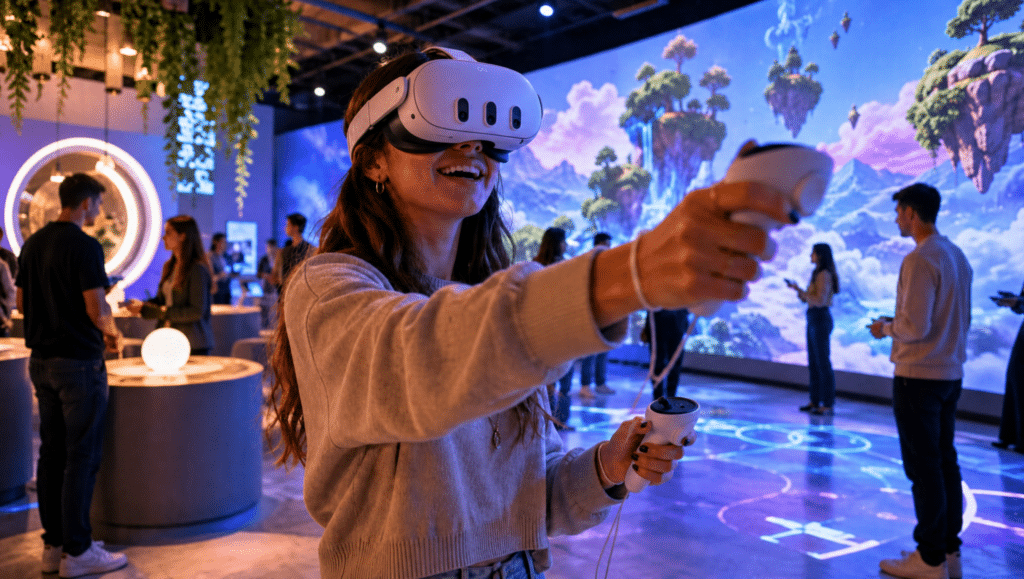
HEADSET
Virtual Reality
When each person needs to enter a dedicated digital scenario and the headset is an essential part of the experience.
CASE STUDIES
Three different ways to engage an audience.
These projects show the difference between a physical installation, shared gamification and individual immersion.
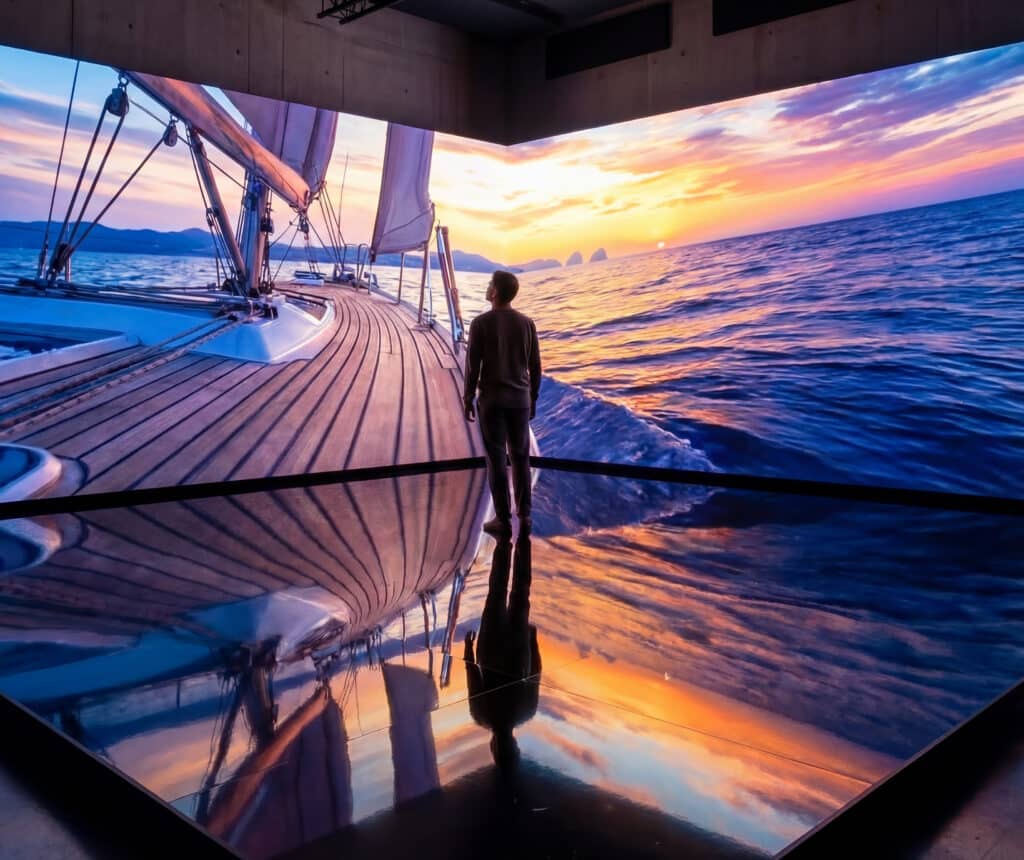
VETTE E ONDE · IMMERSIVE
Vette e Onde
Immersive video installation for two 90° screens, with content designed to loop and work with the real geometry of the space.
THE GAME SHOW · GAMIFICATION
The Game Show
Event platform with connected devices, game logic, live control, scoring and large-screen results.
ROME VR · CULTURE
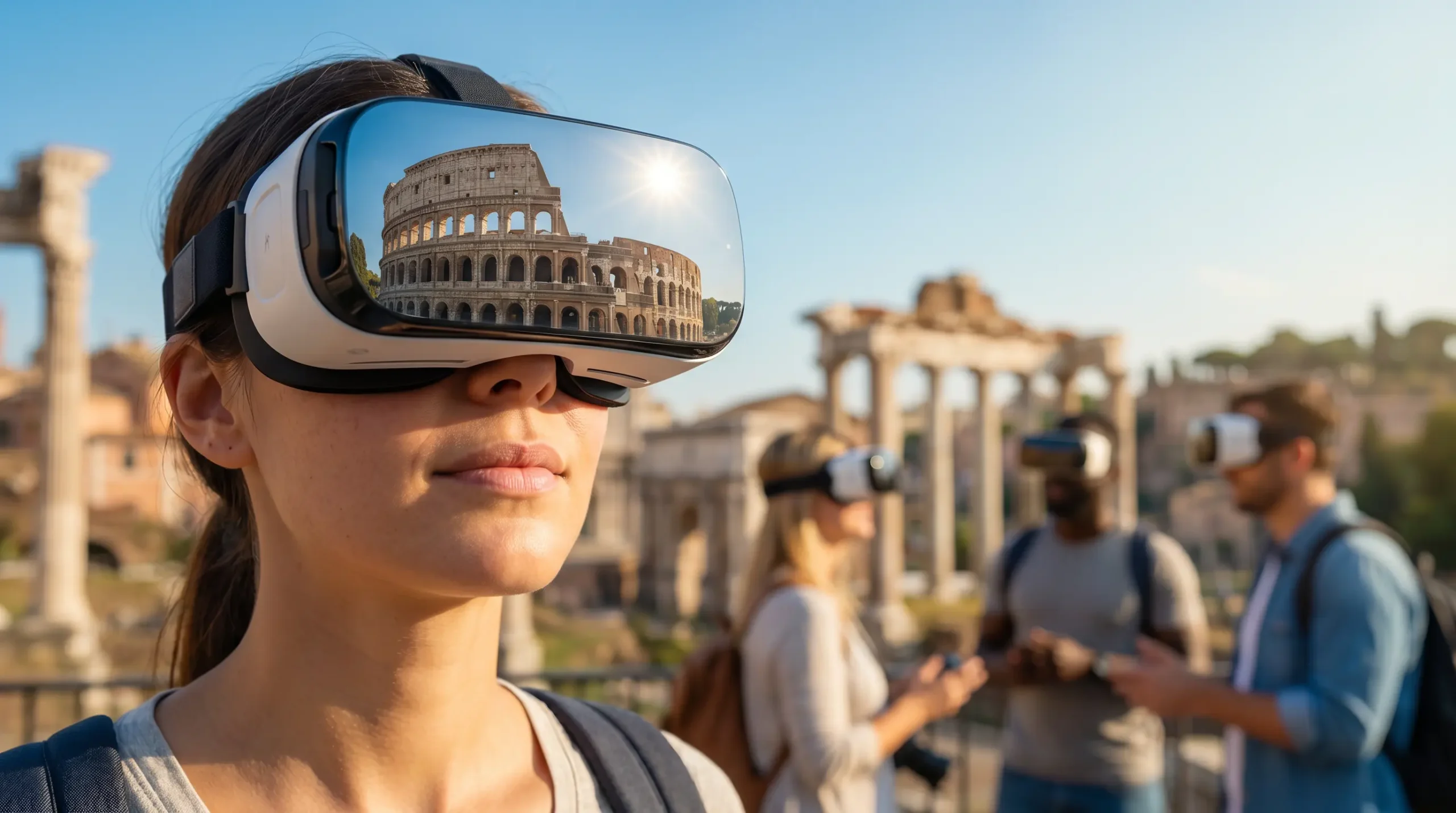
Rome VR Experience
A useful example of the boundary with VR: an individual headset experience rather than a shared physical installation, with a historical environment and AI guide.
FREQUENTLY ASKED QUESTIONS
FAQ about events and interactive installations.
Questions worth clarifying before hardware, content and installation dates are locked.
Do you also provide LED walls, projectors and structures?
Loto Studios designs the concept, content and software. When LED walls, projectors, structures, cabling or onsite technical services are required, we define the requirements and work with partners or suppliers chosen with the client. The exact scope is clarified in the quotation.
How much does an interactive event installation cost?
It depends on content, software, surfaces, devices and interaction level. The ranges published on this page refer to the digital scope; hardware, transport, installation and technical service may be quoted separately.
How far in advance should the project start?
It depends on complexity, source-material availability and the need to test on the real setup. The event date cannot move, so concept, technical specifications and responsibilities are defined before full production.
Can the same experience be reused across multiple events?
Yes, if it is designed as a reusable platform. In that case we separate the initial architecture, configurable content and the adaptations required for each activation.
Do you create gamification and games for events?
Yes. We can develop quizzes, game shows, leaderboards, multi-device logic and large-screen interactions based on participant count and session flow.
Do you create videomapping content?
We produce content calibrated to the geometry and target surfaces, and coordinate formats and requirements with the technical supplier handling projection and installation.
Can an installation work without an internet connection?
It depends on the chosen architecture. When continuity is critical, we evaluate local operation, fallback modes or recovery behavior appropriate to the devices and services in use.
TELL US ABOUT THE PROJECT
Do you have a venue, a date and an audience to engage?
Tell us the venue, date, expected flow, surfaces and hardware already available. The first discussion helps identify the right format and the technical dependencies that need to be resolved early.
FIRST EXPERIENCE REVIEW
Space, audience and technology before physical setup.
We separate content/software from hardware and technical supply so the quotation starts from a realistic scope.
REQUEST AN INITIAL REVIEW
Tell us about the space and goal.
The fields below are optional and help us give a more relevant first response.


