

A navigable virtual showroom is a 3D store where people explore a collection, open product information and reach the agreed purchasing journey. We design environments and interactions for brands and retailers, choosing web or headset access according to the audience.
We start with the catalogue and actions useful to the customer: finding their way around, examining products, comparing options and reaching a product page or cart. Avatars, multiple users and connections to e-commerce are features to define within the project, not automatic characteristics of every virtual store.
Explore all interactive applications.
A navigable virtual showroom for exploring a space, products and content. Asset quantities, interactions and integrations are defined in the quote.
The schedule depends on the available materials and functionality to develop.
A collection to explore
For brands and retailers that want to present a range in a recognisable environment, guide product discovery or support a launch with an interactive journey.
Start with the main action
If users only need to select variants, a configurator is more focused. If showing products and prices is enough, a good catalogue page may suffice: the 3D space must add a concrete reason to explore it.
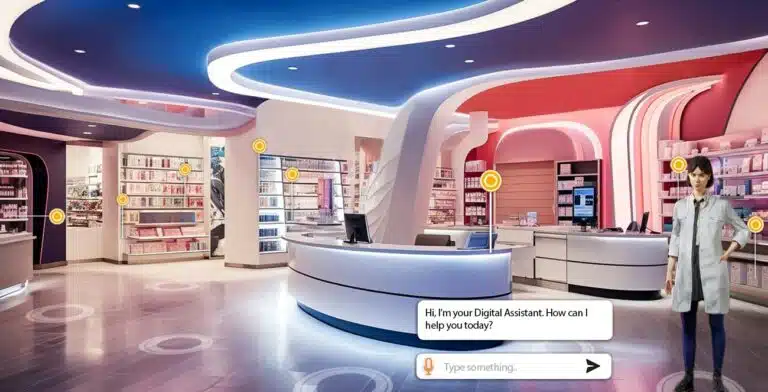
THE DELIVERABLE
From the virtual space to product selection.
We define an initial representative range and the complete journey, from entry to the commercial destination.
Navigable environment
A branded 3D space with points of interest and navigation suited to the agreed devices.
Products and content
Models or images, product information, details and interactions prepared for the selected catalogue. Quantities, variants and level of detail are defined before development.
Purchasing journey
Links to existing product pages or integration with catalogue and cart, where included. Delivery includes journey testing and instructions for launching the experience.
AN EXPERIENCE EXAMPLE
Explore the space and approach the products.
The video already on this page shows the visual language of a virtual store. It helps assess the environment and navigation; it does not by itself demonstrate integration with a catalogue, payments or real-time availability.
THE PROCESS
The journey comes before the space.
Each phase has a review point: the environment must help people understand and select products.
Objective and audience
We agree on the range, required actions, devices and final destination: product page, cart or contact request.
Journey and prototype
We design entry, navigation and product points. A prototype allows interaction to be approved before completing the space.
Environment and catalogue
We prepare agreed models, materials, product information and variants, balancing visual quality and content size.
Connections
We implement the handover to the intended systems and check product identifiers, data availability and error behaviour.
Testing and delivery
We test navigation, readability, loading and the commercial journey on the agreed devices. Updates and support have a defined scope.
EXPERIENCE FORMATS
The format follows the commercial objective.
The images illustrate possible environments: features and integrations depend on the agreed project.
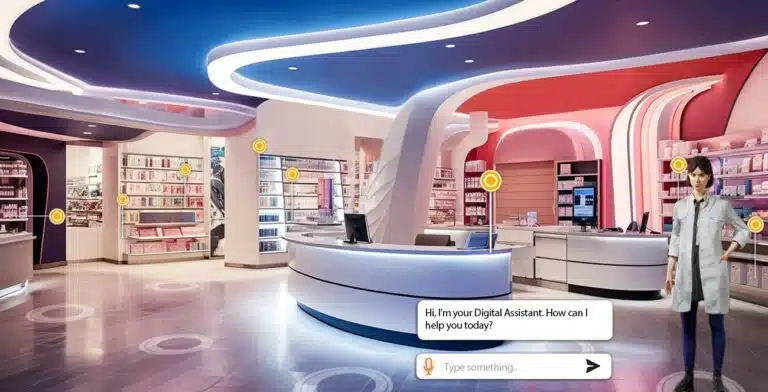
Virtual store
A collection organised in an explorable space, with selectable products and information accessible during the visit.
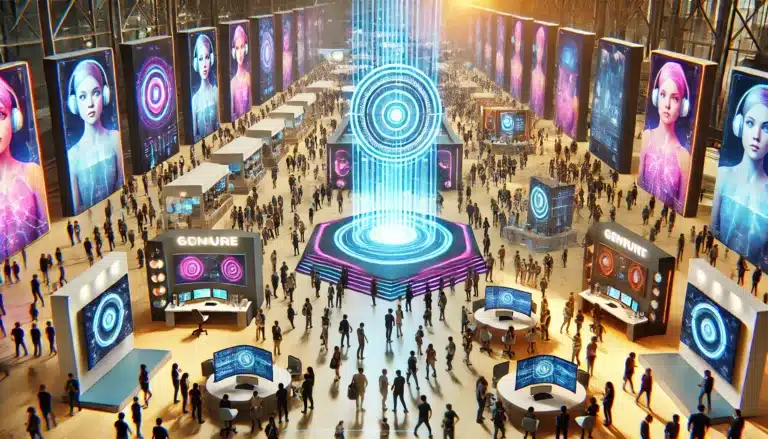
Collection launch
An environment dedicated to a presentation or digital event. Concurrent access, assistance and event duration are scoped before development.
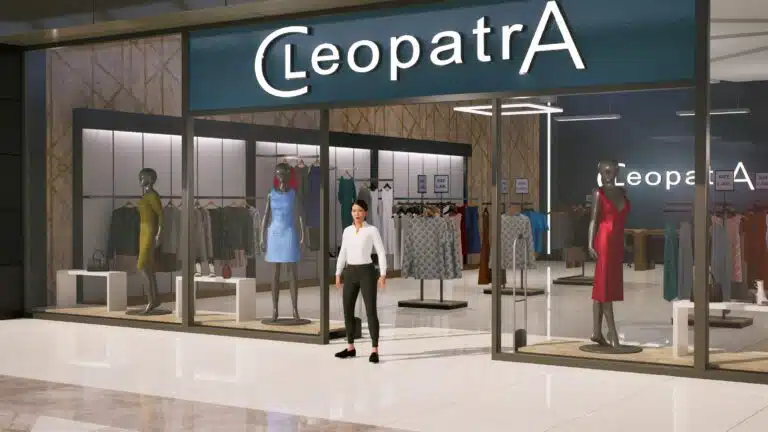
Storefront connected to the catalogue
A space that supports discovery and links to purchasing pages. Synchronising prices, availability and variants requires a specific integration.
RELATED PROJECT
A digital showroom for jewellery.
The Virtual Jewelry Showroom project provides a reference for presenting products in a 3D environment. Read the case to assess its context: the features of your sales journey are defined separately.
FREQUENTLY ASKED QUESTIONS
Before designing a virtual store.
Is a headset required for virtual shopping?
Not necessarily. The experience can be designed for a browser or a headset. Audience, devices and access methods are selected in the brief and verified during testing.
Can users purchase directly in the 3D store?
Users can be directed to the existing online store’s product page, or the catalogue and cart can be integrated. Payment, order management and product availability remain in the agreed systems: the 3D environment alone does not automatically include them.
Are 3D models needed for every product?
It depends on the experience. Images and product information are enough for some points; viewing an object from every side requires a suitable model. We can start with a limited range and define the work around the available materials.
Can products and prices be updated?
Yes, but the method must be designed. A synchronised catalogue requires data sources and connections; manual updates require a publishing process. We define who updates what and which content remains editable.
Can avatars or multiple visitors be added?
These options should be assessed according to the objective. Concurrent presence, assistance and conversation require specific usage rules, content, data handling and capacity tests. They are not necessary for every shopping journey.
What is needed for a quote?
The objective, audience, approximate number of products, available materials, devices and desired connection to the online store. Also indicate who will update the catalogue and whether the experience will be permanent or tied to an event.
LET’S TALK ABOUT YOUR PROJECT
Which collection would you like people to explore?
Describe the products, audience and action you want to enable: discovering a collection, selecting a product or reaching the purchase.
AN INITIAL DISCUSSION
Spaces, interactions and content to explore.
Tell us what users should see and do, which materials are available and the intended devices. We will define content and functions together.
REQUEST AN INITIAL DISCUSSION
Tell us what users should be able to do.
The fields below are optional and help us tailor our first response.