

THE FOUNDATION
Digital Humans and AI 3D Avatars designed for video, web and real-time applications.
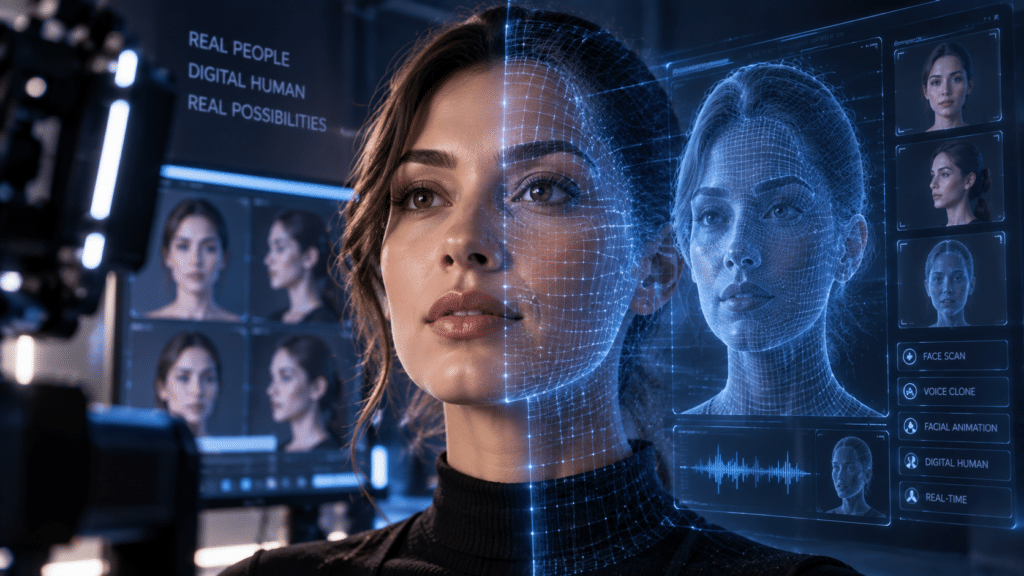
A Digital Human is a digital presence designed to appear, speak or interact in videos and applications. It can be a real-time 3D Avatar, a generative AI Presenter or the face of a conversational system.
Loto Studios designs identity, face, voice, animation and integration around the final channel. We can start from a real person with suitable materials and permissions, or create an original character for brands, culture, retail, hospitality, training and immersive experiences.
The aim is not to add “AI” to a face: it is to decide what must remain consistent across video, web, VR/AR and real-time applications, which elements are generated and which are part of the approved asset or identity.
REAL APPLICATIONS
When a Digital Human is useful — and when a simpler solution is enough.
We start from the role of the digital presence, not from the technology. An avatar can make sense when face, voice and identity need to remain recognisable across content or interactions. If the main problem lies elsewhere, a more direct tool is preferable.
It makes sense when the digital presence needs to…
Recurring videos, training, tutorials and multilingual versions become easier to manage when face, voice and identity follow a defined pipeline rather than starting from scratch each time.
VR, AR, configurators, showrooms and installations require a rigged, animated 3D avatar optimised for the platform, rather than a video played inside a scene.
Museums, tourism, hospitality, retail and events can use a digital guide or ambassador when the character is part of the visitor journey rather than decoration. In digital commerce, it can present a collection and help users explore products and options when the experience includes coherent content and interactions. Read our article on virtual shopping and AI avatars.
If the character needs to speak, listen or respond, visual identity, voice, lip-sync and the conversational engine must be clearly separated before integration.
Choose another format when the problem is…
WHAT WE DELIVER
From a person or character brief to a digital identity ready for the final channel.
The deliverables depend on what needs to remain stable: identity, 3D assets, face, voice, animation, a video pipeline or integration with a real-time experience.
Input: a real person or character brief, visual references, photos/videos or a scan when available, voice materials, motion recordings where useful, languages, final channel and required level of interaction.
Output: depending on the scope, a 3D model and rig, facial setup and lip-sync, assets and materials, a presenter pipeline, voice or voice clone, video output, real-time integration and usage documentation.
For real people, before production we define which materials can be used, the channels in which the replica will appear and the scope of face and voice included in the project. For original characters, control starts with character design, style, wardrobe, voice and behaviour.
OUR SERVICES
Six production methods, with the choice guided by the objective.
The six methods share parts of the pipeline, but differ significantly in inputs, real-time requirements, rights, voice and distribution channel. We therefore treat them as distinct solutions rather than calling everything an “AI avatar”.
AI face and voice cloning
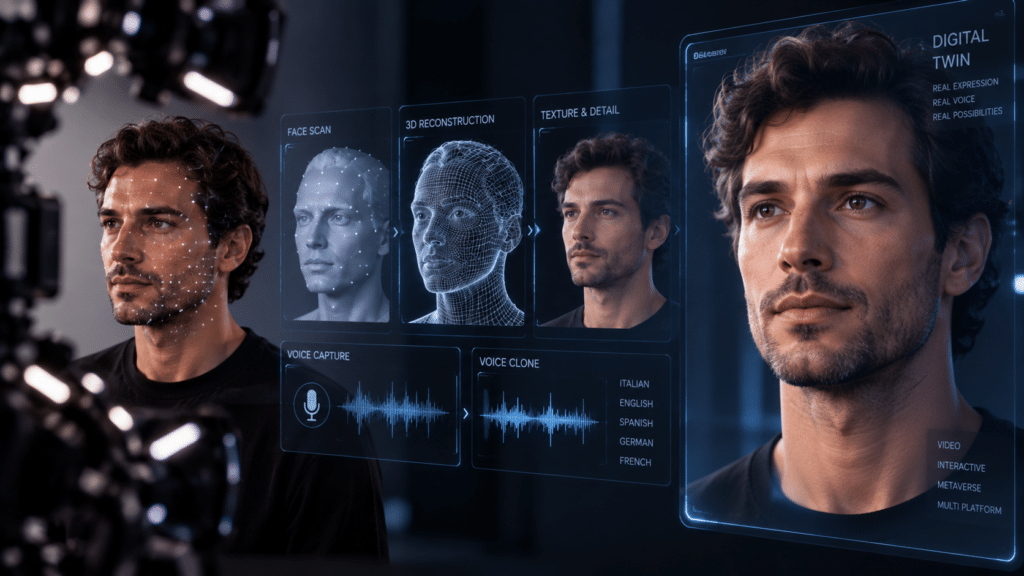
A digital replica of a real person for content and applications, built only from the agreed materials and uses. Face and voice are treated as separate components of the project.
AI video avatars
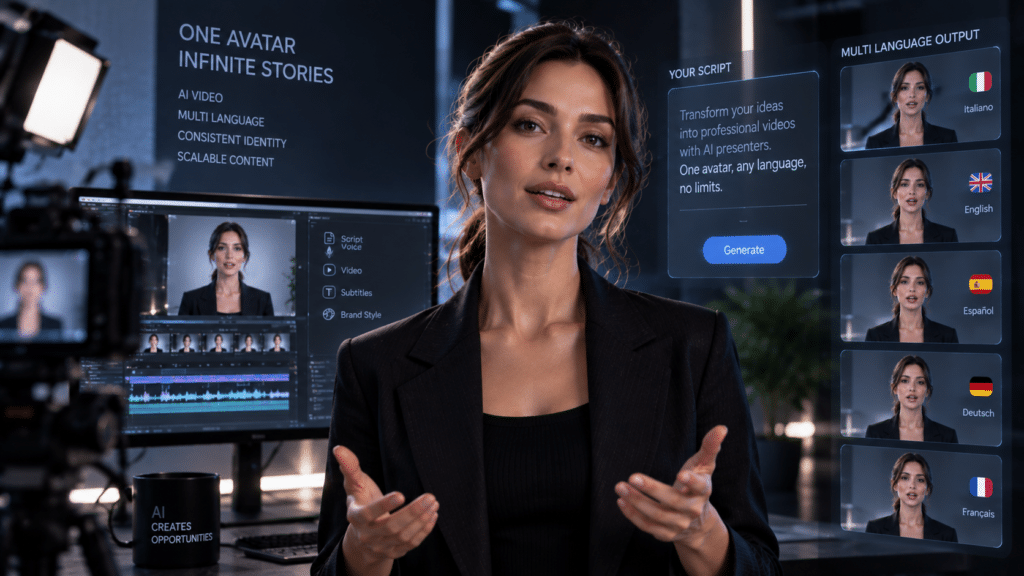
Digital presenters for corporate videos, training, tutorials and multilingual content. The script generates the content; this is not a 3D avatar reacting in real time inside an application.
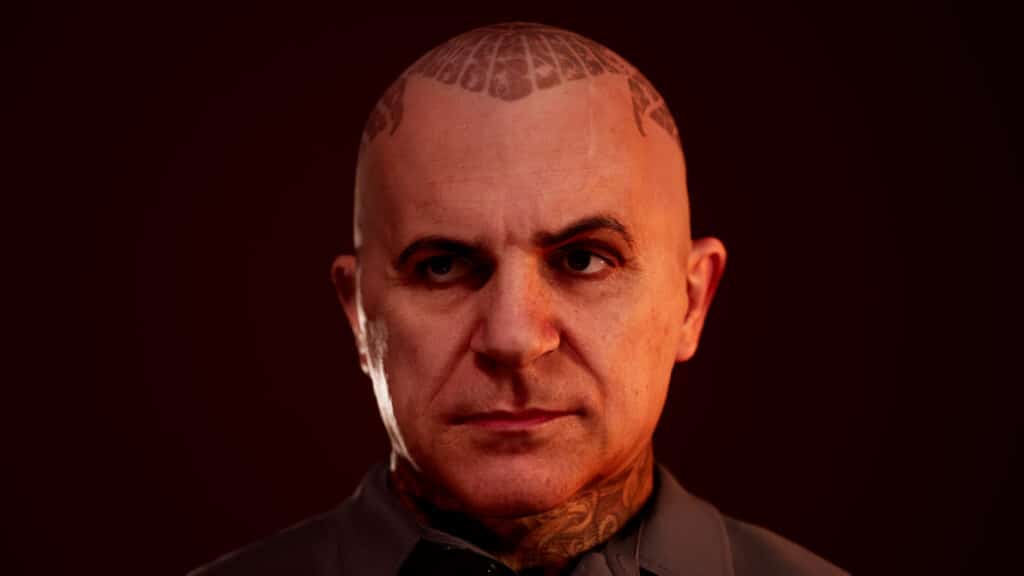
Real-time 3D avatars
Rigged 3D models optimised for interactive applications, configurators, VR and AR. Geometry, facial rig, animation and performance are calibrated for the target platform.
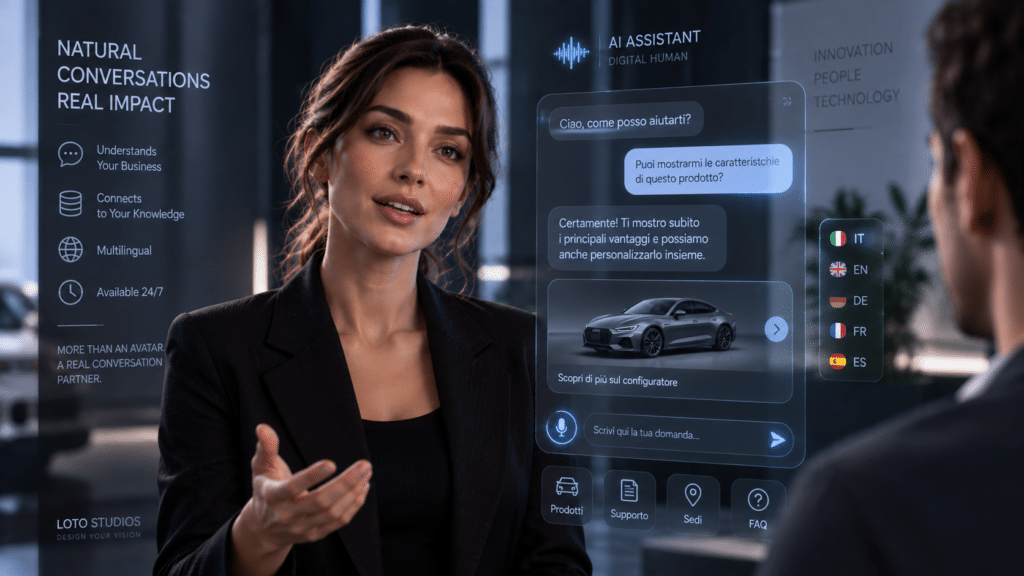
Conversational Digital Humans
Visual interfaces connected to conversational systems. The Digital Human handles presence, voice and lip-sync; knowledge base, memory and workflows belong to the Assistant engine and are integrated as a separate scope.
Vucìa · Your business. Always there.
An assistant that answers only from your company content, in chat and by voice. Choose a talking 3D character with Avatar or Enterprise. From 49 € per month, excluding VAT.
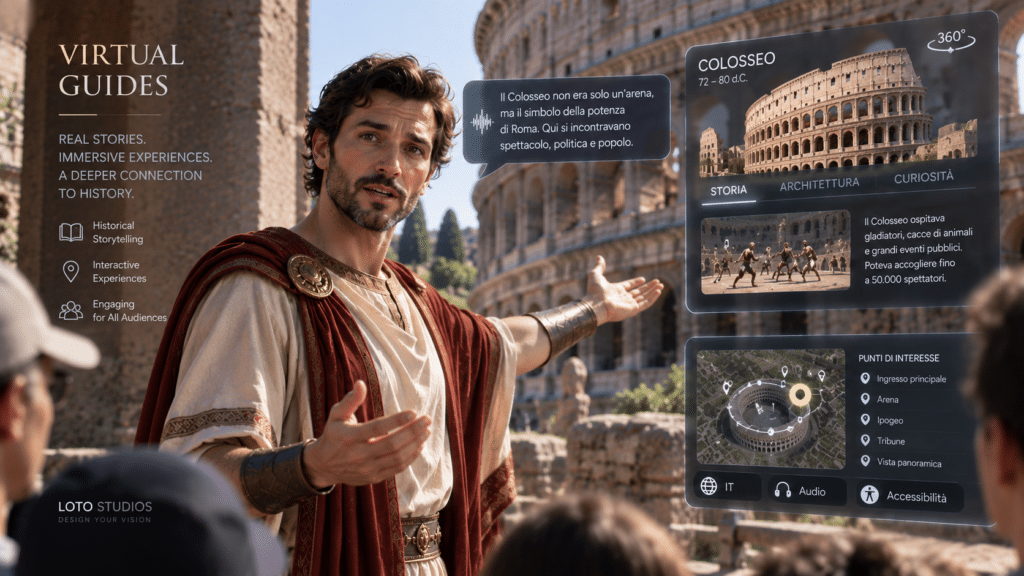
Virtual guides
Digital characters for museums, tourism, showrooms, hospitality and immersive experiences. The character is designed around its role in the journey, rather than as a decorative element.
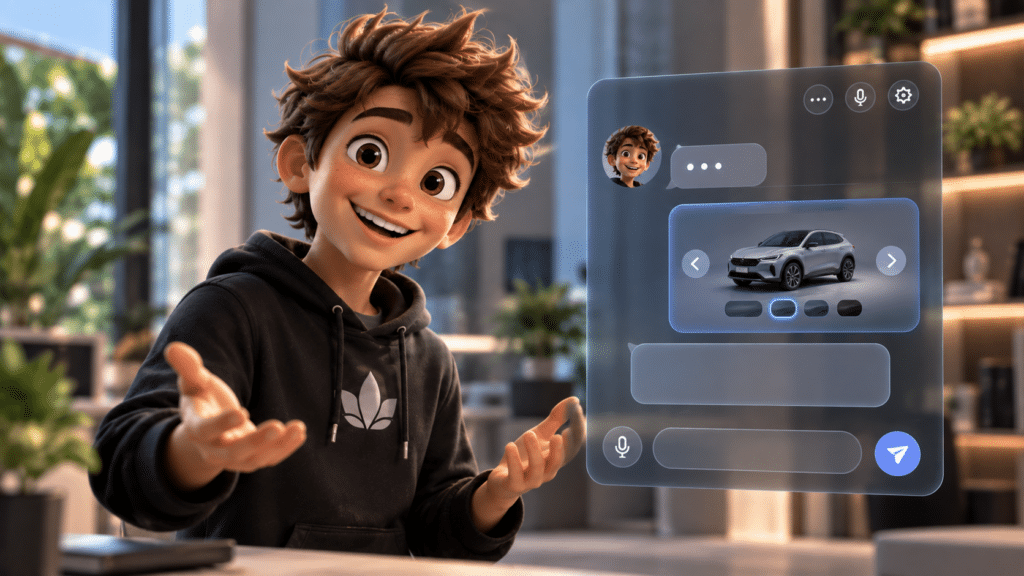
Digital mascots and characters
Original characters built around a brand’s identity for campaigns and applications. Character design, style, voice and animation can be defined without replicating a real person.
DIGITAL HUMANS IN ACTION
From a digital face to usable content.
In the video, a digital presenter introduces Dallara, showing how a Digital Human can give a face and voice to a corporate message.
OUR PROCESS
How we work: from defining the identity to delivery.
A four-stage process with clear checks and approval points: from the initial materials to an avatar ready for its intended channel.

Brief, materials and permissions
We define the objective, channel and type of avatar. We gather photos, videos, references, any available scan and permissions for face and voice. We check what is already usable and what needs to be produced.

Identity and avatar production
We build face, look, voice and digital presence around the chosen pipeline. For real-time applications, we prepare the model, textures and rig; for AI presenters, we configure identity and training materials.

Animation, voice and first preview
We configure animation, lip-sync, voice and behaviour in the real context. We share a first preview to check likeness, expression, pronunciation and consistency before finalisation.

QA, integration and final delivery
After feedback, we run the final tests and prepare the output for web, video, VR, AR or an application. Where included in the scope, we also support technical integration and verification on the target channel.
TECHNOLOGY AND CONTROL
Digital identity, real-time and conversation are three different layers.
Separating them makes clear what we are building, what needs to be updatable and which parts of the system can be reused across channels.
Face, voice and permissions
For a real person, we define source materials, face, voice, intended channels and uses included in the scope. If these elements are unavailable or should not be replicated, we design an original identity.
Real-time, rig and lip-sync
A 3D Avatar needs to move, speak and perform consistently on its platform. Rig, facial setup, animation, lip-sync, rendering, streaming and target hardware therefore belong to the same project.
Voice and multilingual delivery
Voice cloning, synthetic voice and languages form a separate layer from the character’s appearance. Pronunciation, tone and synchronisation need to be checked in the actual use case: changing language means more than translating a script.
AI Assistant ≠ Avatar service
If the main value is a knowledge base, customer service, text, voice or WhatsApp, the starting point is the product Vucìa – AI Assistant. This page remains dedicated to the design and production of the identity/avatar and its integration.
QUOTE
Already have a person, character or channel in mind?
Tell us whether it should be video or real-time, a real person or an original character, with or without voice cloning and conversation. We separate identity production, integration and ongoing costs before defining the scope.
PRICES AND DELIVERY
How much does an AI Avatar or Digital Human cost?
The figures are indicative starting prices for different scopes. The cost changes with realism, source materials, character design or replication, rig, voice, intended channel and required integration.
| Avatar type | Indicative price | Indicative delivery | Action |
|---|---|---|---|
| Stylized Web Avatar | From €1,000 | Confirmed after brief | Request a quote |
| Pro Web Avatar | From €1,500 | Confirmed after brief | Request a quote |
| Ultimate Web Avatar | From €3,500 | Confirmed after brief | Request a quote |
| Custom AI Video Avatar | On quotation | From 2 weeks | Request a quote |
| Real-time 3D Web Avatar | On quotation | 4–6 weeks | Request a quote |
| 3D Showroom Avatar | On quotation | 6–8 weeks | Request a quote |
The prices shown for Web Avatars cover creation of the asset/avatar. AI Video Avatars and real-time 3D solutions are quoted according to scope because production, rig, voice, animation, deployment channel and integration vary. The conversational engine, knowledge base, hosting, hardware and ongoing services remain separate when they belong to the Assistant product or are not included in the quote.
WHICH SOLUTION IS RIGHT?
3D Avatar, AI Presenter or conversational assistant?
Three solutions can share a face and voice while addressing different problems. The choice depends on where the character will be used and how much it needs to interact with the user.
REAL-TIME 3D
3D Avatar
This is the right choice when the character needs to exist inside an application and react in real time. The model is prepared for movement, expressions and performance consistent with the target platform.
Ideal for VR, AR, configurators, showrooms, installations and interactive software where camera, lighting and behaviour depend on the experience.
GENERATIVE VIDEO
AI Presenter
Designed to produce video content from scripts while keeping the face recognisable and the voice consistent. It reduces the need to arrange new filming for each update.
Particularly useful for training, tutorials, corporate communication, social media and multilingual versions where production frequency matters more than real-time interaction.
CONVERSATION
Assistant with an avatar
Here, the main value is not only the character, but the ability to understand requests and respond using company information. The avatar becomes the visual interface of a conversational system.
Suitable for customer care, hospitality, retail, digital reception and touchpoints where text, voice, knowledge base and visual presence need to work together.
CASE STUDY
Avatars and Digital Humans already used in real projects.
Four examples with different purposes: a digital character, an automotive configurator, a VR guide and a hospitality assistant.

METAIDENTITIES · DIGITAL HUMAN
Lee: AI Digital Avatar
A photorealistic digital character developed as a reusable virtual identity: the project shows the identity/avatar layer separately from the individual piece of content in which it is used.
AUDI · AUTOMOTIVE
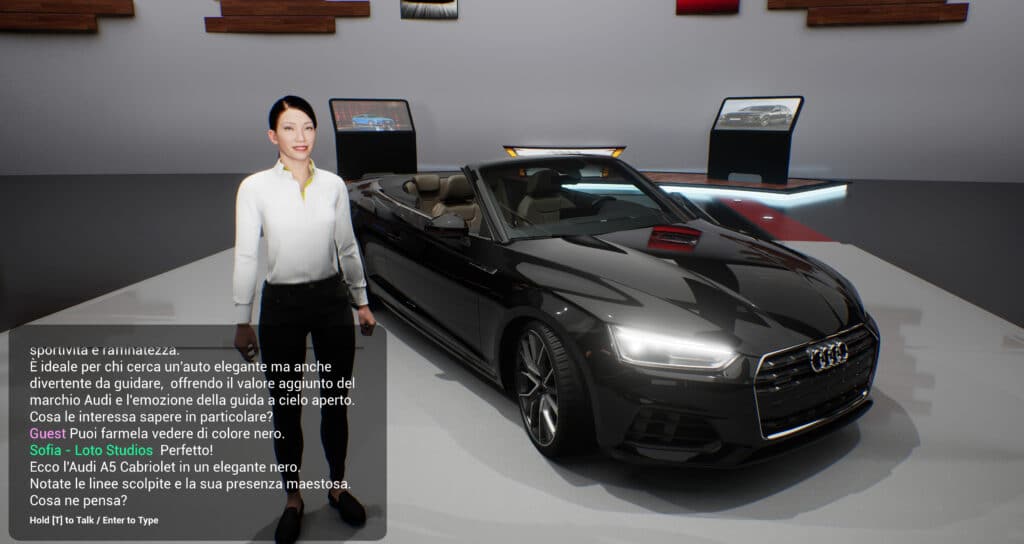
Audi A5 Configurator | AI-Avatar
An AI avatar integrated into an automotive configurator to guide users through vehicle customisation: digital presence and product configuration share the same interactive flow.
ROME VR · CULTURE
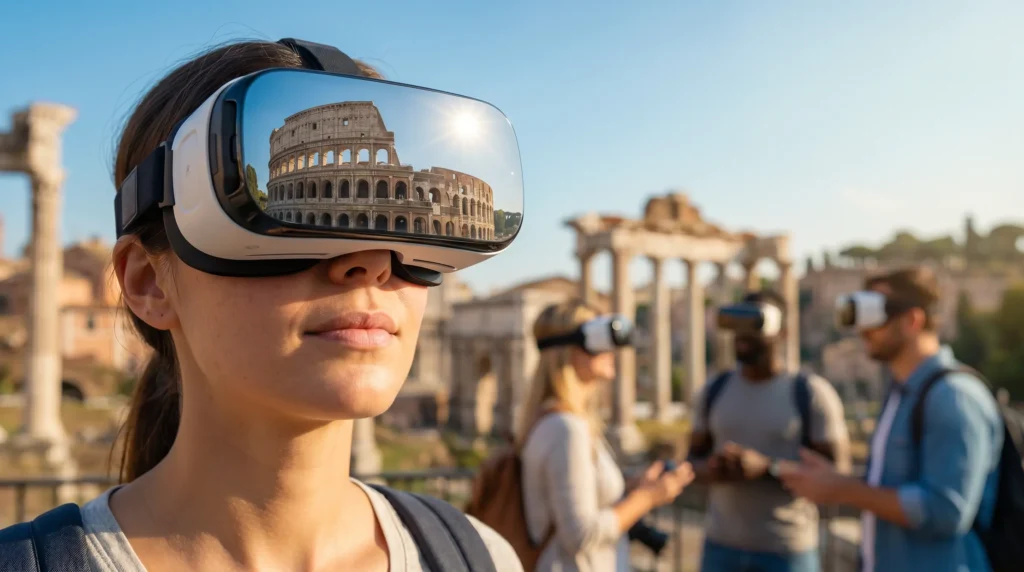
Rome VR Experience | AI Guide
A virtual guide integrated into a VR experience to contextualise historical places and content: an example of a Digital Human designed around its role as a guide inside an immersive experience.
ESC · HOSPITALITY
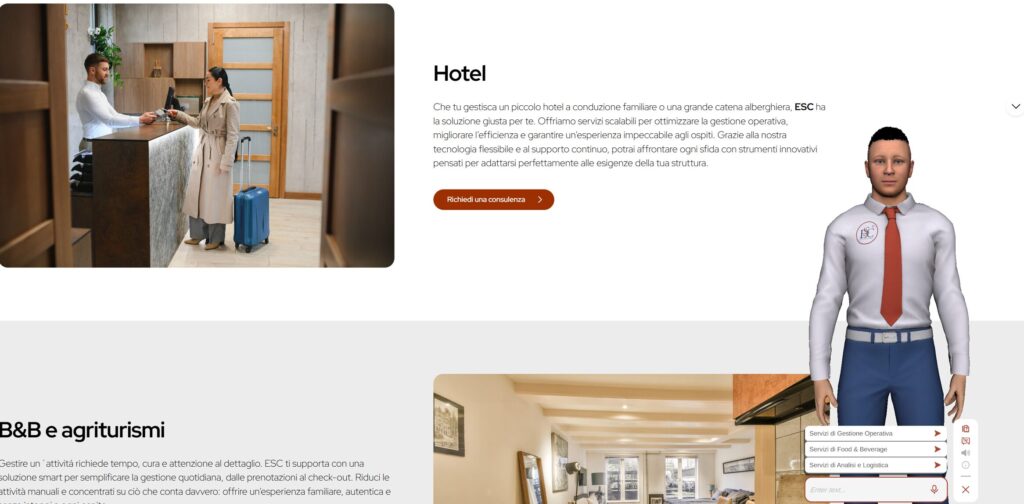
ESC | AI Avatar
A virtual assistant with a visual presence designed to present hospitality information and services: the digital face is the interface, while content and conversation belong to the underlying system.
DIGITAL HUMANS AND 3D AVATARS IN TURIN
Production and development for companies in Italy and abroad.
Loto Studios is based in Turin and works on digital projects that can also be managed remotely, from defining the identity to producing content or technical integration.
Turin · Piedmont
Corso Unione Sovietica 594, 10135 Turin. Briefs, assets, reviews and approvals can be managed digitally.
FREQUENTLY ASKED QUESTIONS
FAQ about AI Avatars, 3D Avatars and Digital Humans.
The differences that affect production, integration and use.
What is the difference between a 3D Avatar and an AI Avatar?
A 3D Avatar is a rigged, animated three-dimensional model intended mainly for real-time applications. AI Avatar can refer to a generative presenter, a conversational character or an avatar connected to an artificial intelligence system.
Can you create a Digital Human from a real person?
Yes, when suitable materials and the necessary permissions to use the face and voice are available. Alternatively, we can design an original character.
Can an avatar speak multiple languages?
Yes, the pipeline for video and conversational projects can support multiple languages. Voice quality, pronunciation and validation depend on the chosen technologies.
Can a 3D Avatar be used in VR or AR?
Yes. The model needs to be prepared for real-time use and integrated into the specific application. Learn more about Virtual Reality and Augmented Reality.
Can you connect a Digital Human to a company knowledge base?
Yes, but the knowledge base and conversational logic belong to the Assistant system, while this page concerns the digital presence. The two layers are designed separately and then integrated. See Vucìa – AI Assistant.
What materials are needed to create a Digital Human?
It depends on the format. For a real person, photos, videos, voice references, a scan or motion recordings may be needed; an original character needs a visual brief, style, clothing, behaviour and voice. The final channel determines which inputs are actually necessary.
What is the difference between a video avatar and a real-time 3D Avatar?
An AI Presenter generates a video from a script. A real-time 3D Avatar is a rigged model that runs inside an application and needs to respond to the camera, animation, inputs and platform performance in real time.
How do you manage a real person’s face and voice?
Before producing the replica, we define which materials can be used, the face or voice included in the scope and the channels in which the Digital Human will appear. If these elements are unavailable, we can design an original character rather than replicate a person.
LET’S TALK ABOUT YOUR PROJECT
We start from the identity and channel, not from the technology name.
For the initial discussion, we need to understand who or what the Digital Human should represent, where it will be used and how much it needs to speak, react or be updated over time.
AN INITIAL DISCUSSION
Character, voice and role in the experience.
Share the intended style, channels and available materials. We will define the character and its role in the content or application together.
REQUEST AN INITIAL DISCUSSION
Tell us about the character to develop.
The fields below are optional and help us tailor our first response.