

WEB 3D CONFIGURATOR
Product configuration in the browser, without installing software.
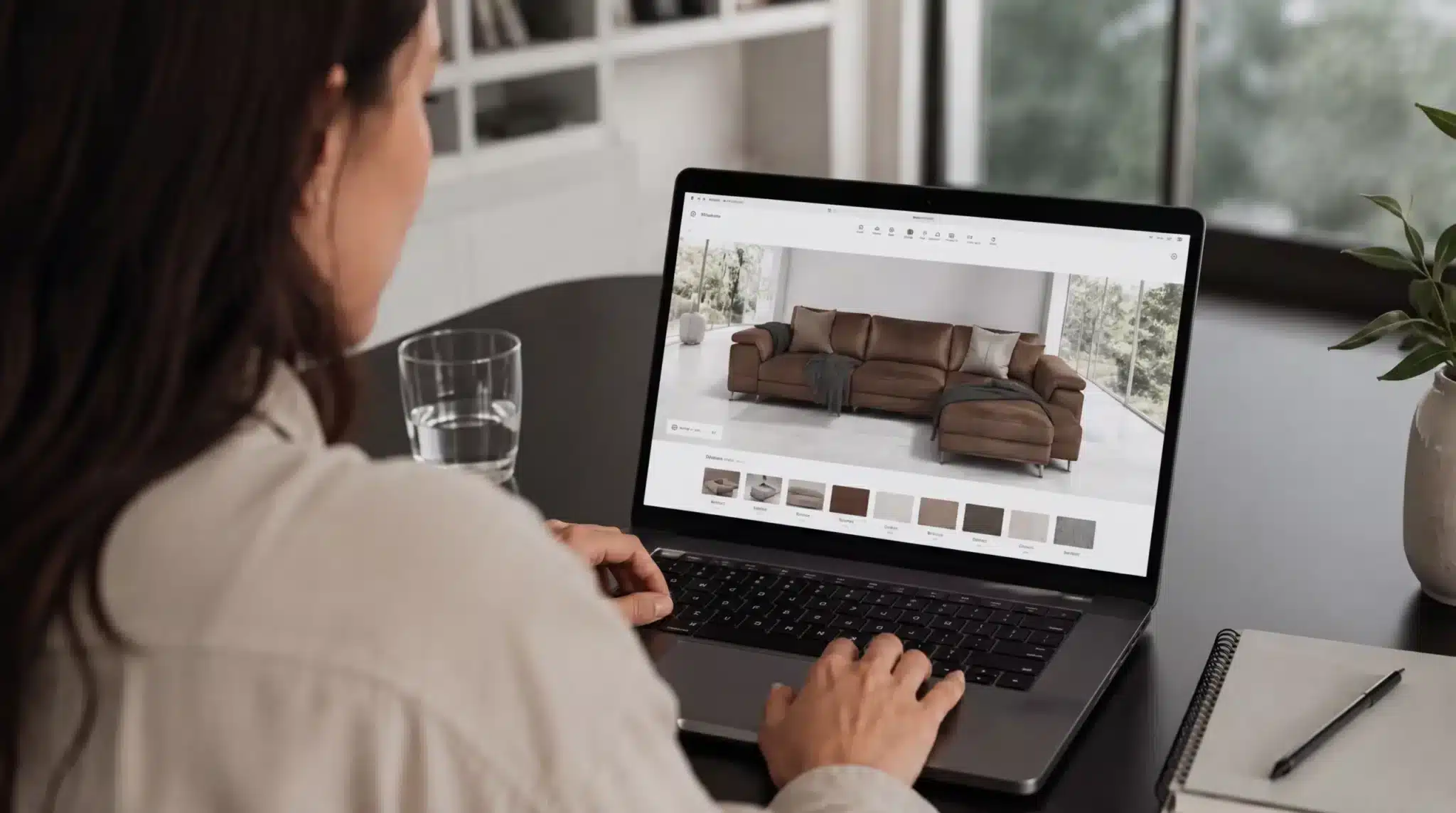
A web 3D configurator lets users choose variants, materials and components while viewing the result in real time directly in their browser. It is suitable when the experience must be accessible from a website, e-commerce platform or sales network through a simple link.
To bring your product to your website, e-commerce platform and sales network, our 3D product configuration service: online delivery, access across devices, configuration logic and connections to business systems. The technology is chosen according to visual quality, asset size, number of variants, target devices and required integrations.
When the configurator needs to run on the web
For digital catalogues, e-commerce, lead generation, sales support, online showrooms and tools customers or resellers can access without installation.
When the browser and network are not the right constraints
Offline use, dedicated hardware, complex local integrations or demanding real-time visuals may make a dedicated app or a streaming architecture more suitable.
WHAT IT NEEDS TO MANAGE
More than a rotating model: variants, rules, data and actions.
A useful web configurator combines 3D representation with product logic. Before development, we define what can change, which combinations are valid and what needs to happen after selection.
Variants and materials
Colours, finishes, components, accessories and alternatives are organised in a structure that users can understand and that can be maintained at the data level.
Rules and compatibility
Options may depend on technical or commercial constraints. The rules must be defined before they are turned into interactions.
Product data
Codes, descriptions, availability or prices can be connected when there is an authoritative data source and a planned integration.
Leads, enquiries and quotations
The configuration can become a commercial enquiry, a summary or an input for a quotation process, if included in the project.
E-commerce, CRM, ERP and APIs
We assess connections to external systems only after clarifying the data, responsibilities, authentication and flows to maintain over time.
Browsers and devices
Desktop, tablet and mobile have different limitations. The quality of the 3D and interface is balanced for the devices actually required.
DEMO / REAL PROJECT
PlanEstimator: from configuration to a commercial estimate.
In the ForMe Design project, 2D/3D interaction is connected to surface-area calculation and the generation of information useful for quotations. It is a concrete example of how a configurator can go beyond visualisation and become part of the sales workflow.
VIEW PLANESTIMATOR →TECHNICAL CHOICE
WebGL, streaming or application: the platform follows the use case.
The word “web” describes the channel, not a single technology. The aim is to choose an architecture that strikes the right balance between accessibility, visual quality, operating costs and integrations.
When opening and using it is the priority
Suitable when the experience must start directly in the browser and the 3D content can be optimised for the user’s device.
When the scene is heavier
It can be considered when rendering runs on the server and the browser receives an interactive stream. It requires infrastructure and operating costs to be sized appropriately.
When control and local integrations are needed
It may be preferable for offline use, specific hardware, events or functions that need more access to the device than a browser allows.
PROCESS
Product rules first, then interactive 3D.
The most costly risk is starting with the graphics before defining the catalogue, variants and user flow. The prototype validates structure and performance before the system is extended.
Product mapping
We gather variants, rules, users, outputs and the systems involved.
Asset preparation
We check and optimise CAD files, models, materials and naming conventions.
Prototype
We validate the interface, main configurations and target browsers/devices.
Logic and integrations
We implement the rules, data and connections included in the scope.
QA and release
We test flows, responsiveness, configuration errors and actual behaviour.
REAL PROJECTS
Configuration applied to different products and processes.
Project evidence helps distinguish a demonstration interface from a project that actually needs to manage options, logic and commercial objectives.

DALLARA · AUTOMOTIVE CONFIGURATOR
Visual quality and product customisation
An automotive configuration project in which the interface and 3D representation must support a product with a strong visual component.
EXPLORE THE PROJECT →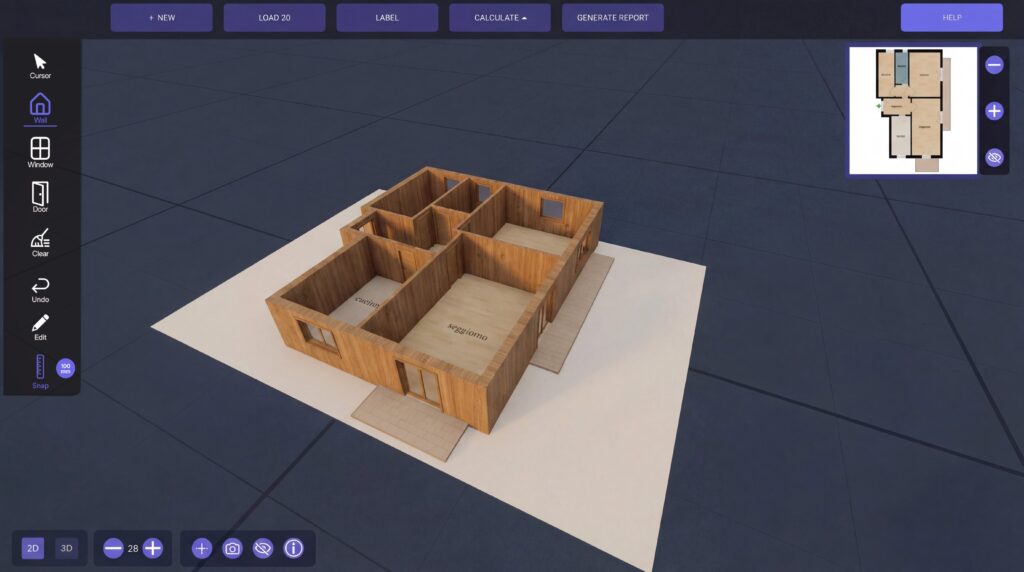
FORME DESIGN · PLANESTIMATOR
2D, 3D and the sales process
Configuration becomes an operational tool: the model, surfaces and data work together to produce information useful for estimates and sales.
EXPLORE THE PROJECT →PRICES AND TIMINGS
For a web configurator, scope matters more than the number of screens.
The published figures are a starting point, not an automatic quotation. Variants, asset quality, rules, integrations and target browsers have a much greater impact than a simple page count.
From approximately €2,000
Published reference for web/product configurators. The actual cost is defined by the functional scope and available assets.
10–20 working days
Published estimate for smaller web projects. Integrations, extensive catalogues or asset production may require more time.
Rules, assets and integrations
The number of product families, variants, CAD/3D quality, sales logic, APIs, outputs and target devices are the main factors in the quotation.
FAQ
Questions about web 3D configurators.
The answers mainly depend on the size of the 3D content, product rules, systems to connect and devices to support.
Does a web 3D configurator work without installation?+
Yes. With a browser-based architecture, users access it via a URL. However, the level of quality and complexity depends on the target devices and how the rendering is delivered.
Can you start from CAD or STEP files?+
Yes, if the material is usable. Before committing to web performance, we check the structure, size, naming conventions, parts actually required and optimisation work involved.
Can it connect to e-commerce, CRM or ERP systems?+
This can be included, but it is not automatic. It requires APIs or documented integration methods, an authoritative data source and a clear definition of what the configurator needs to read or write.
Are WebGL and Pixel Streaming the same thing?+
No. In a WebGL experience, the browser runs the optimised 3D content directly. With Pixel Streaming, rendering takes place on a remote machine and is streamed to the browser: this changes the architecture, operating costs and performance profile.
How much does a web configurator cost?+
The published starting price for web/product configurators is approximately €2,000. The quotation depends on variants, rules, 3D assets, integrations, outputs and technical targets. For more complex systems, the cost increases with the actual scope, rather than a fixed rate per screen.
LET’S DISCUSS THE PROJECT
Do you already have a catalogue, variants or 3D models?
Send us the material available and tell us who will use the configurator, on which devices and what should happen after configuration. The first objective is to understand whether the web is the right platform and which scope can be validated quickly.
REQUEST AN ASSESSMENT
Tell us about the configurator you need to build.
Describe the product, users, variants, available assets and systems to connect. The clearer the scope, the more useful the initial response can be.


