

FASHION AI AND VIRTUAL TRY-ON
Fashion AI and Virtual Try-On is a managed service for creating lookbooks, campaigns, collection previews and e-commerce content from garment images and subject references.
It is part of AI Visual Content. The focus is visual production: colour, patterns, styling, models and collection consistency. It is not presented as a metric size recommendation system without specific data and technology.
When to choose this solution
When many combinations must share the same visual direction
Lookbooks, campaigns, previews and editorial content can extend to multiple garments and models after a representative sample has been validated.
When the promise is to choose the correct size
Generative visualisation is not equivalent to measuring actual fit. Fit, fabric drape and size recommendations require dedicated data and systems.
OUTPUT
Fashion content coordinated across collections, campaigns and catalogues.
The pipeline is defined around the number of garments, models, required accuracy and final channel.
AI lookbooks
Coordinated outfit and garment series on approved models, with a common visual direction.
Fashion campaigns
Editorial and advertising visuals with styling, settings and composition defined in advance.
Collection preview
Visualisation of combinations and creative proposals before organising larger productions.
E-commerce and product pages
Assets intended for product pages, landing pages and digital catalogues when supported by the workflow.
Pose and styling variations
Different scenes and poses while keeping the model, garment and visual language consistent.
Multi-SKU sets
Production organised across multiple garments after a representative test has been validated.
VISUALISATION
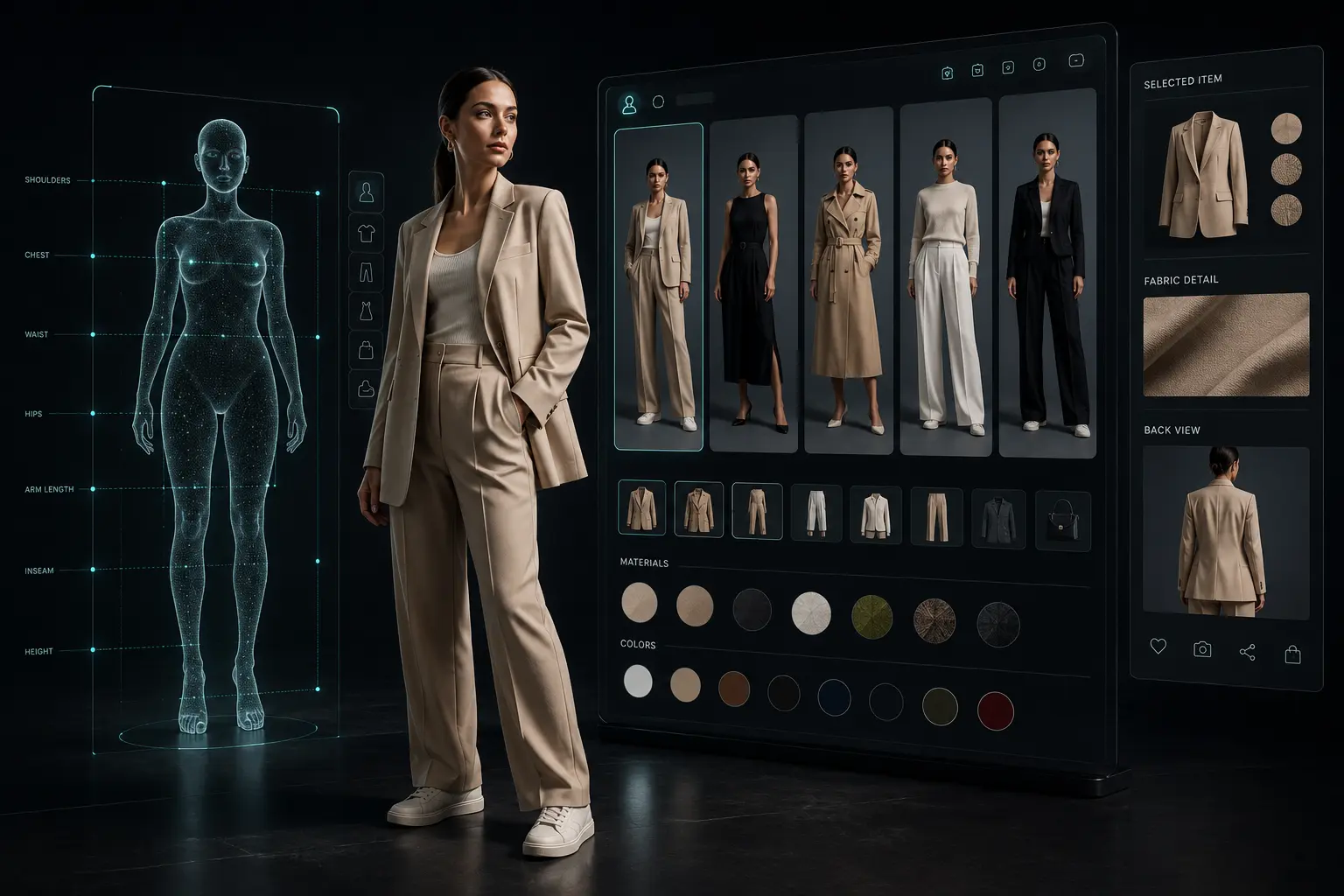
Visual try-on shows appearance. Real fitting measures fit.
The distinction is essential: an image can be very convincing without being a physical simulation of fit. This is why the scope is stated before production.
When the requirement is to make generation recurring and internal, the route to assess is AI Product Studio.
VIEW THE FASHION TRYON PROJECT →PROCESS
First validate a sample garment. Then scale the collection.
Different garment categories can behave differently. The initial test identifies which references and checks are actually needed.
Garment analysis
Shape, patterns, textures, logos and details that cannot change.
Model and style
Subject, pose, creative direction and environment for the series.
Sample test
Validation of one outfit before extending the workflow to more SKUs.
Production
Generation of the approved looks and variations included in the brief.
Quality control
Review of the garment, face, hands, logos, patterns and set consistency.
ACCURACY AND LIMITS
Colour, patterns and details are checked. Size is not assumed.
The pipeline is chosen according to what must remain faithful and what can be interpreted creatively.
Patterns, textures and logos
Multiple views and references improve control over side and rear details and complex surfaces.
Identity and continuity
Consistent references help maintain the subject’s face, body and style across multiple images.
Visualisation ≠ measurement
Size recommendations and precise fitting need a dedicated system with suitable dimensional data: we assess it together.
REAL PROJECTS
Fashion AI applied to try-on and visual production.
A project dedicated directly to Virtual Try-On and a fashion/retail case showing AI visual production in a campaign context.
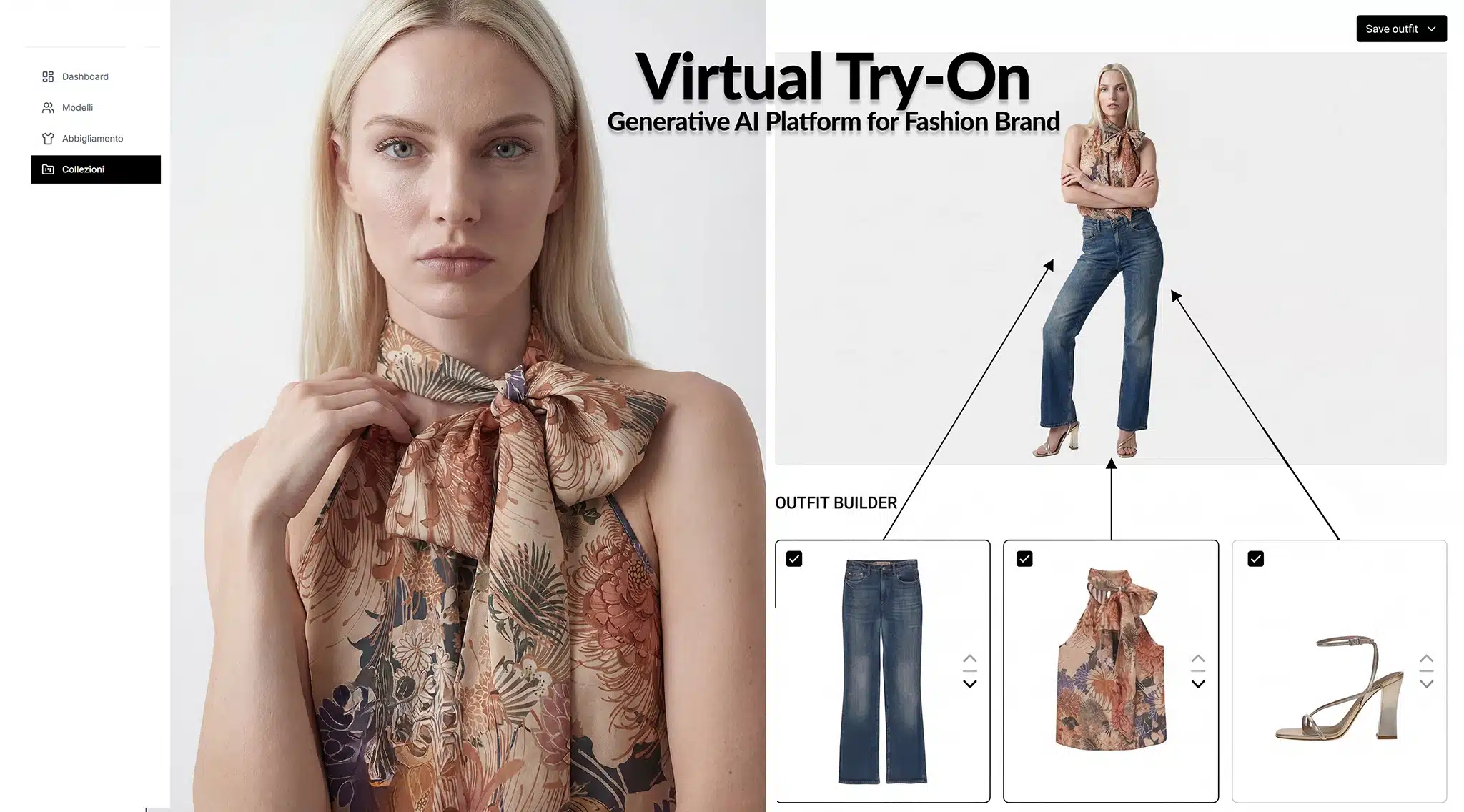
FASHION TRYON · AI PLATFORM
Virtual Try-On applied to fashion
The case closest to this page: outfits, models and visual generation organised in a fashion workflow.
VIEW PROJECT →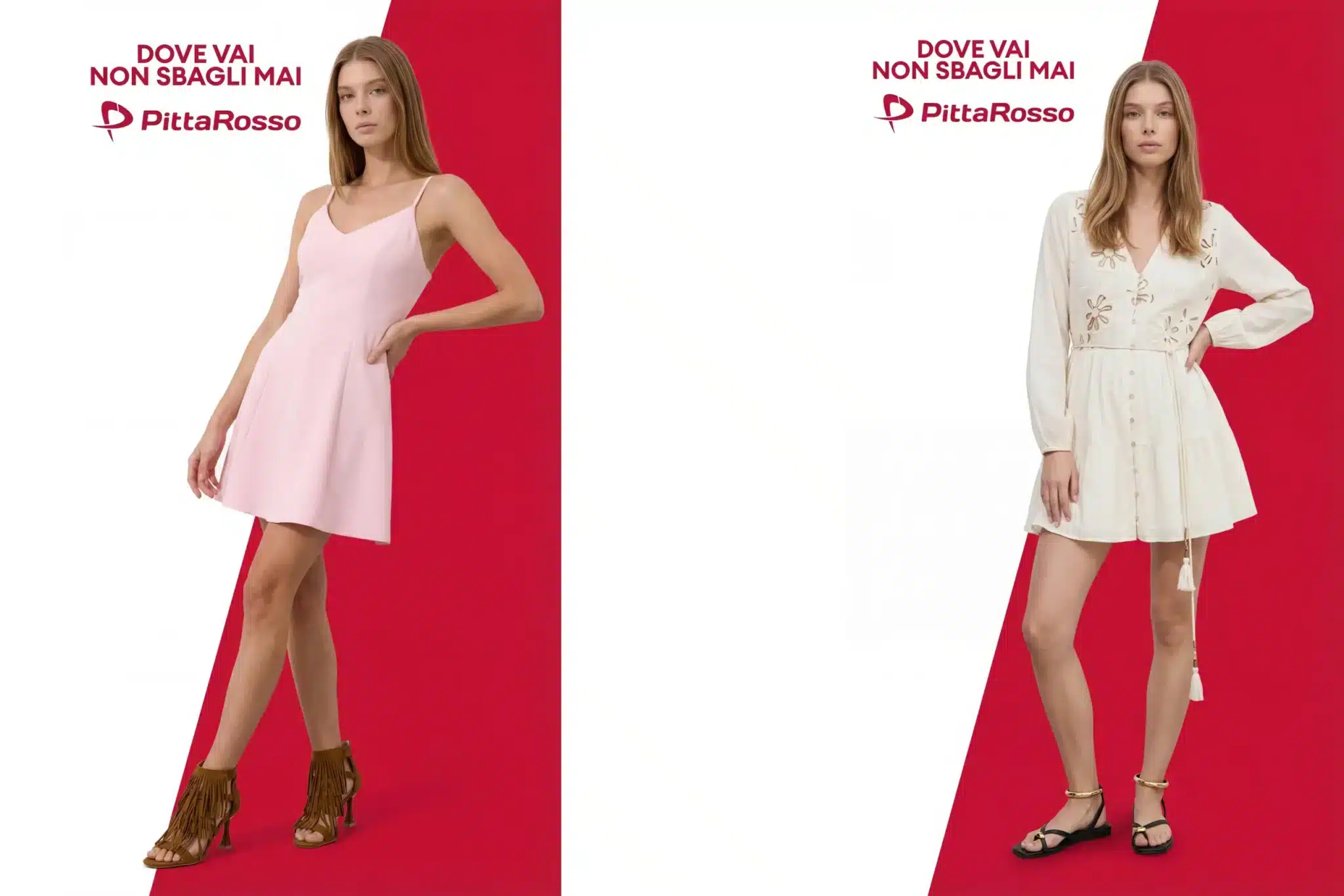
PITTAROSSO · AI ADVERTISING
Fashion imagery for advertising
A real case of fashion AI campaign content. It supports the fashion/retail context without being presented as virtual fitting.
VIEW PROJECT →FAQ
Questions about Fashion AI and Virtual Try-On.
Garment accuracy, models, collection scale and the difference between service and platform.
Does Virtual Try-On indicate the correct size?+
Not necessarily. An AI visualisation can show how a garment looks, but it must not be presented as a real fit measurement without a specific fitting system and dimensional data.
Can you use a real model selected by the brand?+
Yes, if the necessary images and rights are available. Alternatively, digital models can be used, depending on the project and required consistency.
How do you preserve garment patterns and details?+
Details that cannot change are defined first, suitable references are used and outputs undergo human review and post-production. Complex garments may require multiple views.
Can you work on a complete collection?+
Yes, but a representative sample is validated first. This identifies which categories require different treatment and how to organise production.
What is the difference compared with AI Product Studio?+
Here, production is delegated to the Loto Studios team. AI Product Studio is designed to make content generation recurring and more autonomous across large catalogues.
LET’S TALK ABOUT YOUR PROJECT
Do you have a collection to visualise?
Send a few representative garments and the type of output you want. The initial test defines accuracy, style, quantity and limits before extending production.
AN INITIAL DISCUSSION
References, content and intended channels.
We start with the available assets and what must remain consistent in the result. Together, we define the images, videos and formats to produce.
REQUEST AN INITIAL DISCUSSION
Tell us which content you need.
The fields below are optional and help us tailor our first response.