VR GAMIFICATION FOR CORPORATE TRAINING
Turn training into hands-on practice.
Reading a procedure and applying it are different stages. Virtual reality gamification creates a path where participants act, receive feedback and repeat activities with a clear objective.
Loto Studios designs serious games and simulations for standalone and PC-connected headsets. We start with the skill to practise, then define the scenario, interactions and assessment criteria. Scores, missions and progression support the learning path; effectiveness must be assessed through agreed tests, rather than assuming a headset automatically improves learning.
Practise a decision
For onboarding, technical training and soft skills when choosing and acting matter more than simply viewing content.
An observable skill
What action should the participant be able to perform? Which errors matter? We answer these questions before building the game.
VALUE
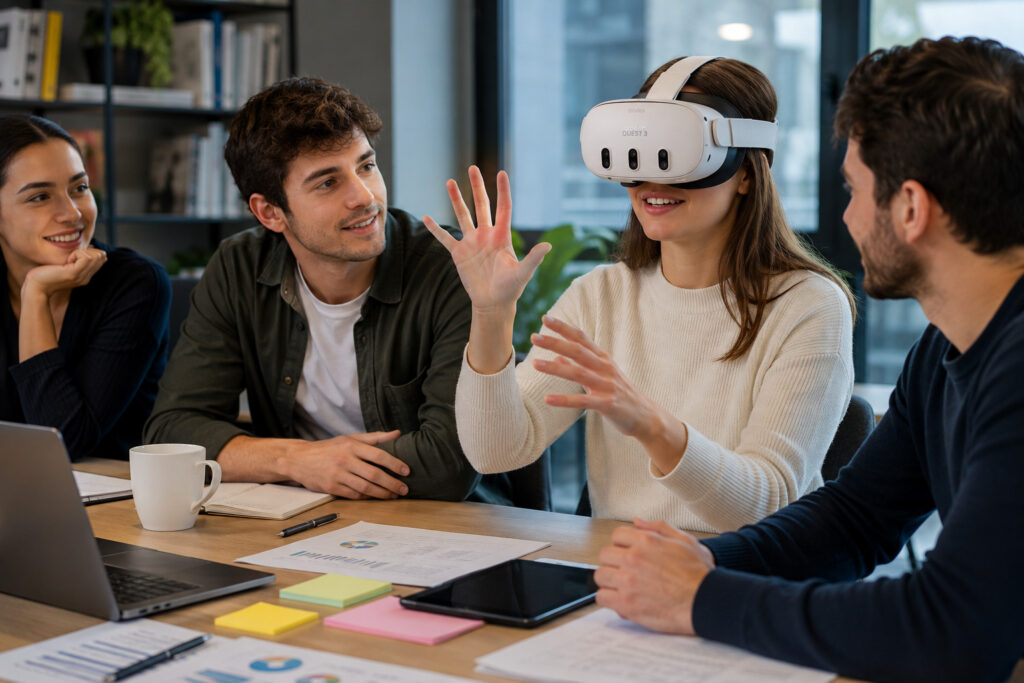
Game mechanics with a learning purpose.
The project combines content, interaction and assessment. Visual quality supports understanding of the scenario and participant comfort.
Missions and progression
We turn the path into understandable activities, with objectives, levels and difficulty suited to the audience. Completing a mission must relate to the skill being practised.
Act and receive feedback
Virtual objects, quizzes, choices and simulations show the consequences of an action. Controllers, hand tracking and multiplayer are assessed against the activity, devices and context.
Useful data for trainers
Time, errors, decisions and scores can support debriefing. We define which data are useful and how to interpret them: a game score alone is not a professional certification.

PROJECT REFERENCE
One procedure, three practice modes.
In the VR Training project developed with Galileo Ferraris High School, participants can use a learning mode with quizzes, a practice mode with guidance and an advanced mode without assistance. The system records time, errors and scores. It is a technical education case: it demonstrates features that can inform a corporate programme, without presenting it as a measurement of corporate client results.
View the VR Training projectPROCESS
From the skill to the serious game.
We agree the inputs and validation criteria at each stage before extending the experience.
Objective
We review procedures, audience and success criteria with the training lead.
Game design
We define missions, progression, feedback, errors and difficulty levels.
Prototype
We test a representative sequence before extending environments and content.
Development
We build scenarios, interactions and session data for the agreed headsets.
Validation
We assess comfort, understanding and evaluation criteria with representative users.
INPUTS AND DELIVERY
Define the experience before the environments.
The initial review defines the technical and operational scope.
Procedures and scenarios
Manuals, videos, training materials and expert input help distinguish essential actions from decorative details. Scenarios can be realistic or stylised.
Standalone or PC-connected headsets
The choice depends on mobility, visual quality, interactions and session logistics. We optimise resources, frame rate and comfort for the target devices.
Sessions and monitoring
We define duration, instructions, the trainer’s role, reporting and updates. Dashboards and learning system integrations are agreed according to project needs.
APPLICATIONS
Different contexts, a defined objective.
Illustrations of possible applications, not client results. Each programme needs its own content and assessment criteria.
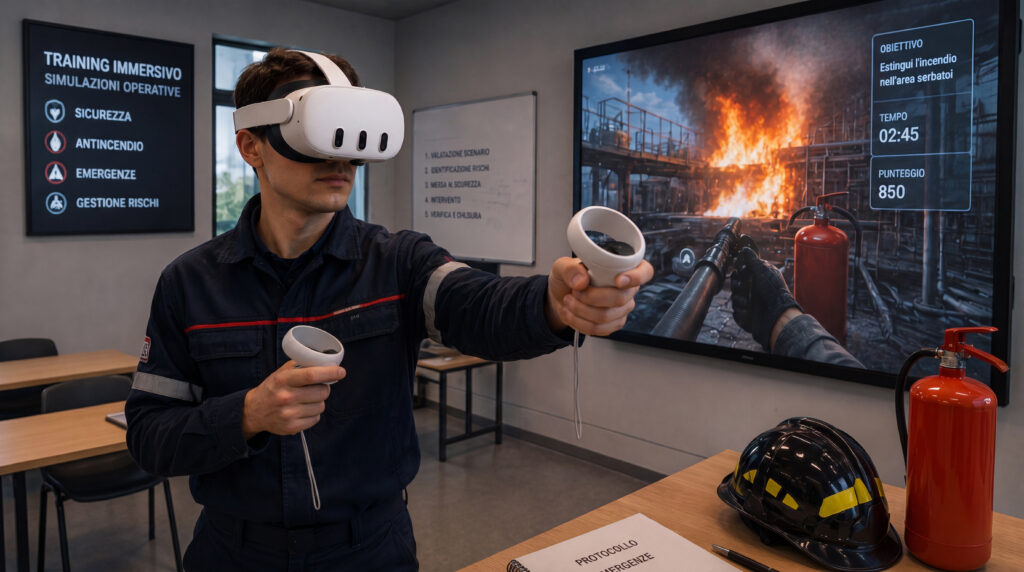
Operational training
Practise work sequences and decisions in a controlled scenario.
Onboarding
Become familiar with environments, equipment and steps before the actual activity.
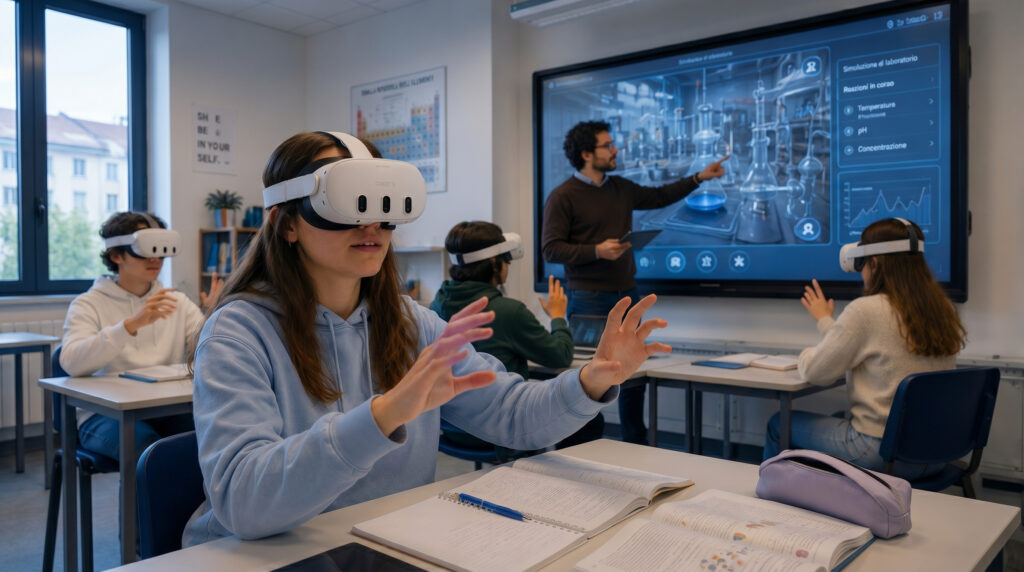
Education
Explore content and solve problems through guided missions.
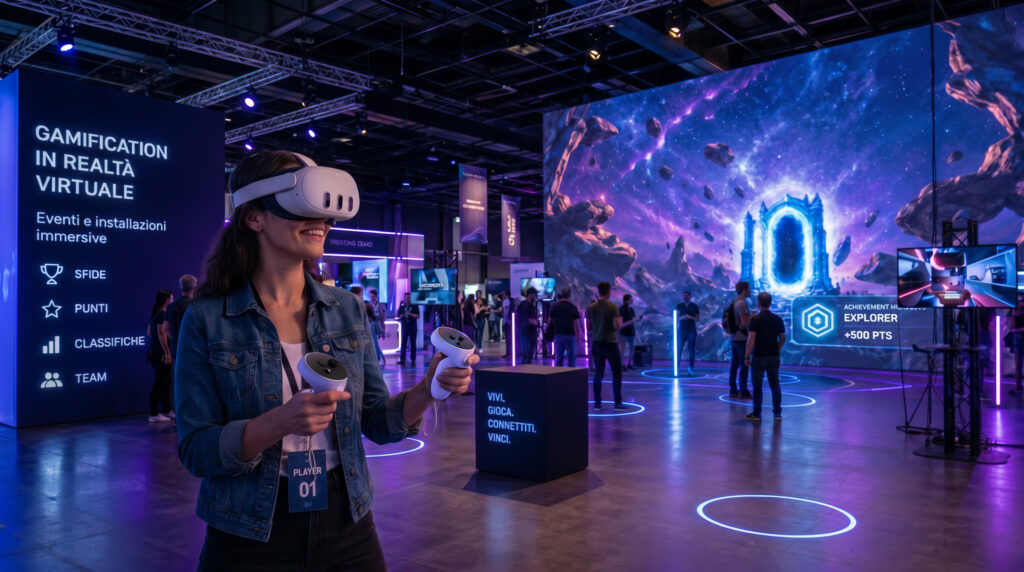
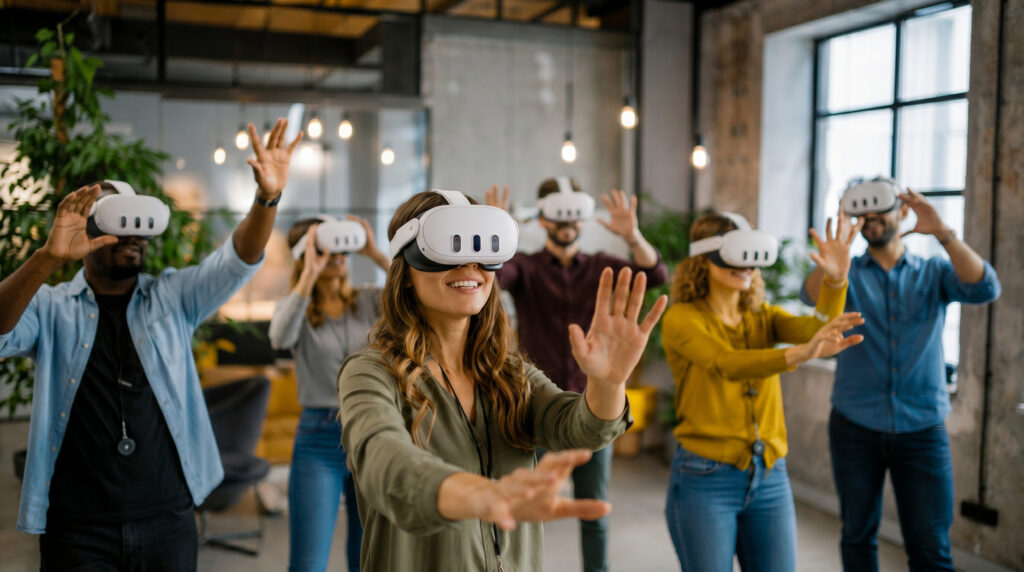
Team building
Include collaborative challenges when communication is the skill to practise.
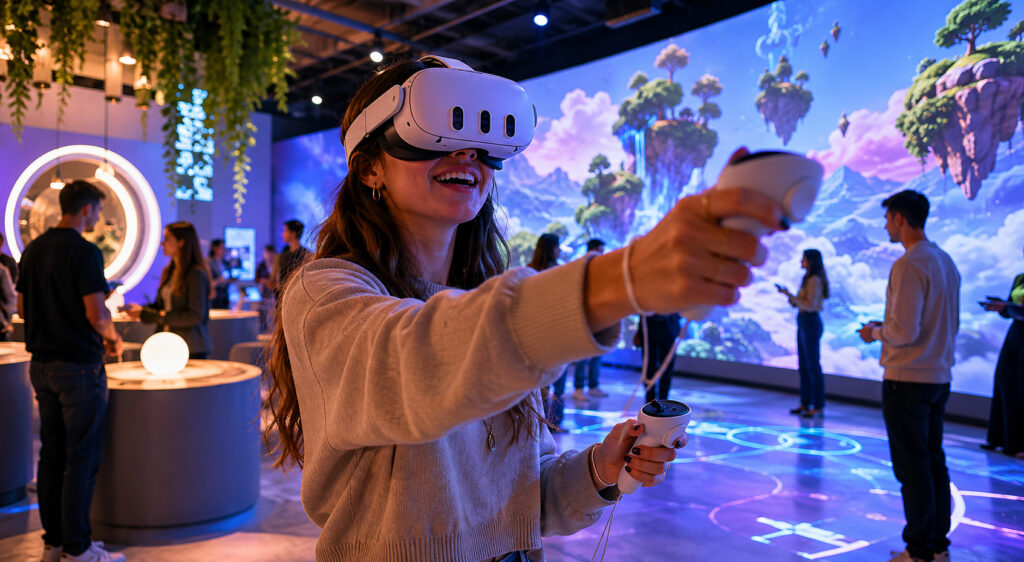
Events
Create a short, understandable activity for a passing audience.
Brand experience
Define interactions that fit the message and objective of the experience.
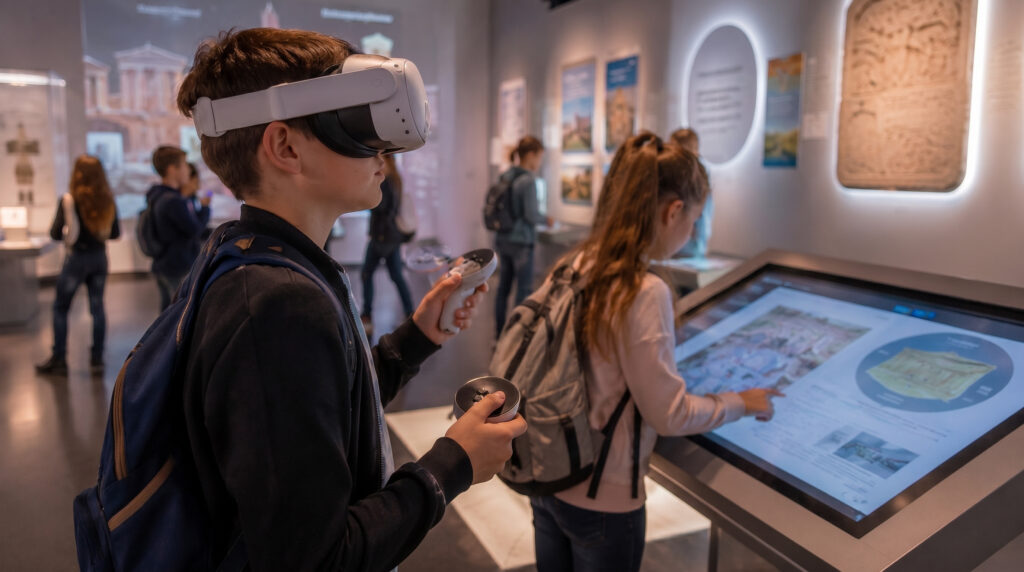
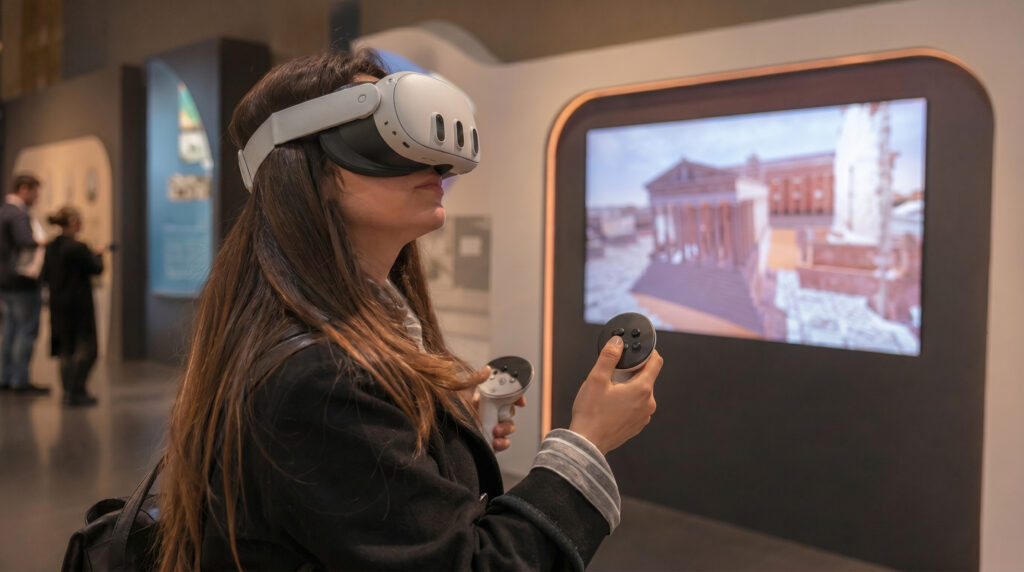
Culture
Combine exploration, content and objectives in an immersive journey.
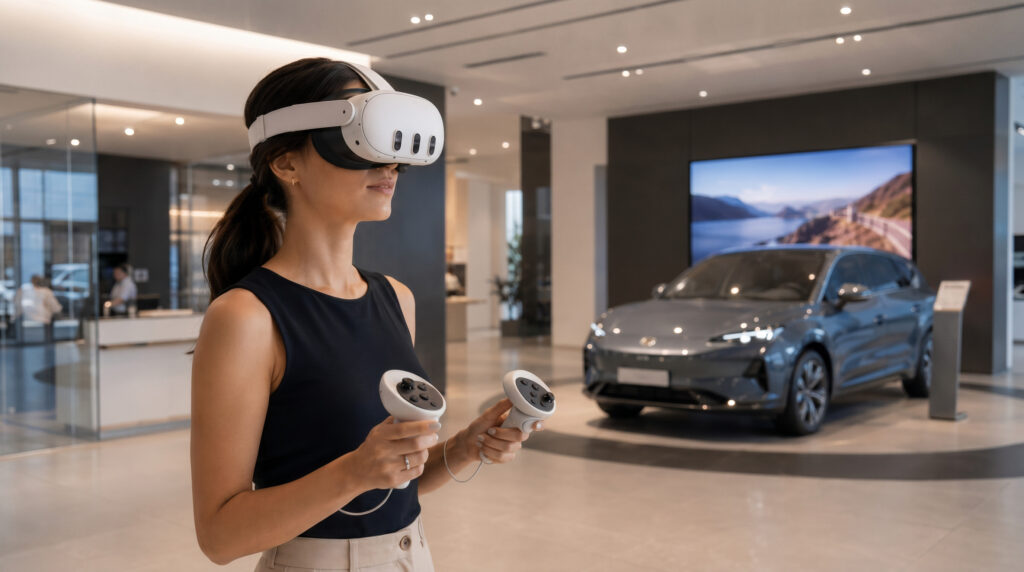
Showrooms
Explore products and features through interactive activities.
OTHER PROJECTS
Explore adjacent immersive experiences.
Alongside VR Training, these cases document different uses of immersive interaction.
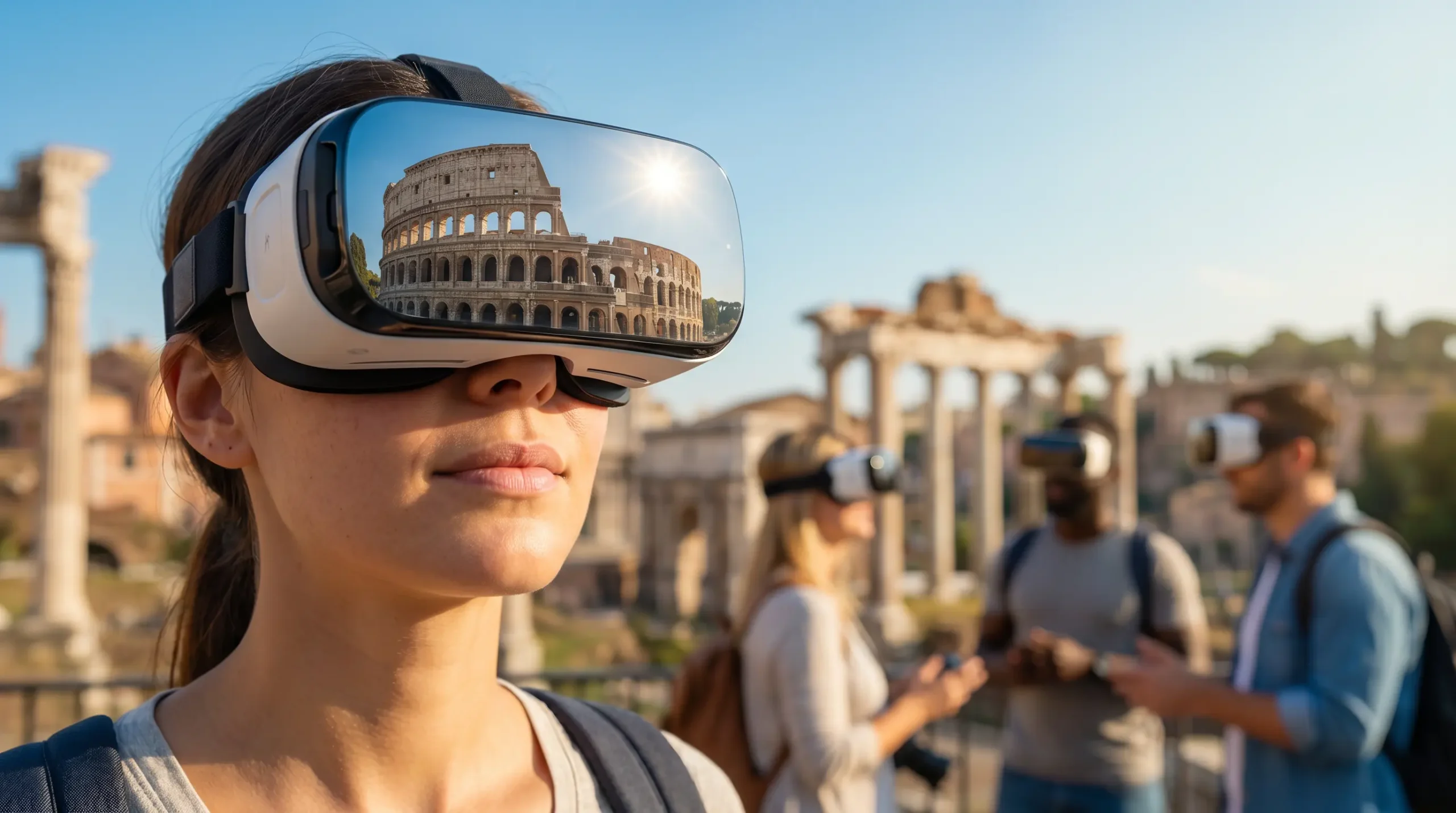
Rome VR Experience
An immersive cultural journey with an AI guide: an example of interactive exploration, distinct from a corporate skills assessment.
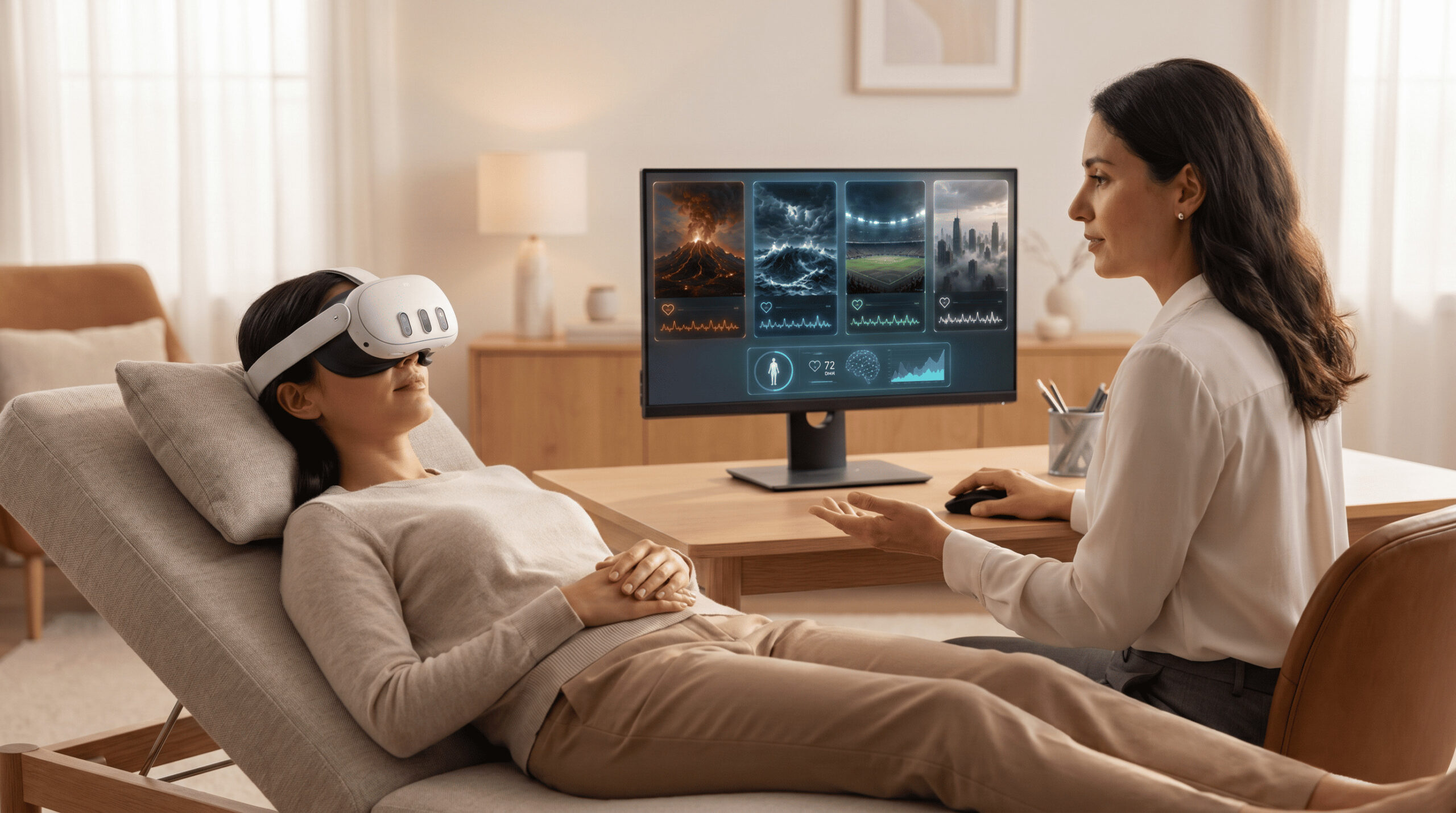
Become XR
An experience for psychology and workplace wellbeing that responds to heart rate. The case demonstrates biofeedback interaction without promising training or clinical outcomes.
FAQ
Questions before getting started.
Inputs, scope and practical choices for your project.
What is VR gamification?
It uses objectives, challenges, feedback and progression inside a virtual reality experience. The mechanics are designed around the skill or content to practise.
How does it differ from VR training?
VR training recreates a context for learning or practice. Gamification adds missions, progression and game feedback. Not every simulation needs scores or competition.
Where can it be used?
Corporate training, onboarding, technical practice, education, team building, events and cultural experiences. The project must fit the audience and intended outcome.
Which devices do you support?
Standalone and PC-connected headsets. Graphics, interaction, comfort and distribution requirements determine the headset and actual features.
Can results be monitored?
We can include session data such as time, errors, decisions and scores. We first agree metrics and assessment criteria: engagement and improvement in a skill are different measurements.
How much does a project cost?
Projects start at around €3,000, depending on game mechanics and customisation. The scenario, number of activities, devices, reporting and integrations need to be defined for a specific quote.
LET’S DISCUSS THE PROJECT
Which skill should participants practise?
Tell us about the audience, procedure or content, available materials and intended headsets. We help define the first scenario, interactions and a test that is useful to the trainer.
AN INITIAL DISCUSSION
Tell us about the project.
Describe the objective and the materials already available.