
SECTORS / CULTURE, MUSEUMS & TOURISM
Immersive technologies for museums, cultural heritage and tourism
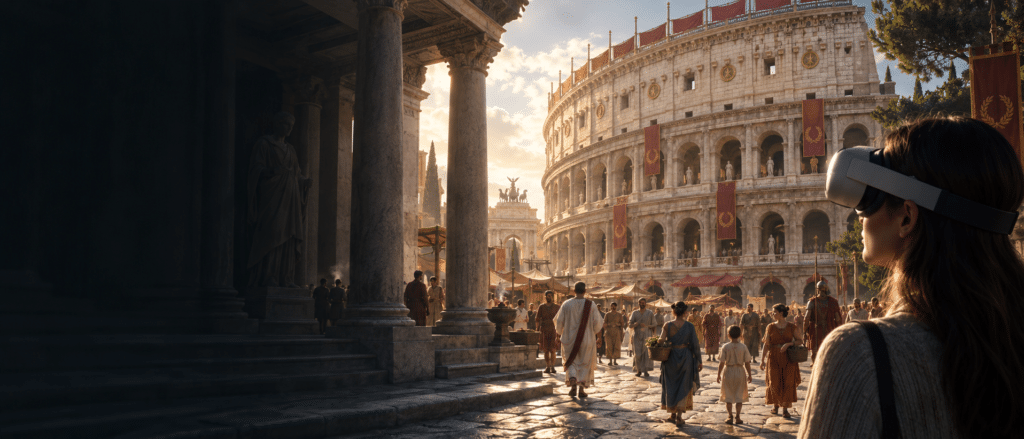
We design virtual and augmented reality experiences, 3D reconstructions, interactive installations and AI guides for museums, archaeological sites, cultural venues and tourism destinations.
CULTURE, TECHNOLOGY, PEOPLE
A new way to experience and tell history
Immersive technologies create new possibilities for museums, archaeological sites and tourism destinations, making culture more accessible, engaging and memorable.
3D reconstruction, virtual and augmented reality experiences, AI guides and interactive installations can bring the past back to life, explain complex stories more directly and reach new audiences both on site and online.
EXPLORE OUR APPROACH →
When is it useful?
When you want to enhance a place, make the visit more engaging, reach a wider audience or communicate what is no longer visible through immersive and accessible experiences.

When should you keep it simpler?
The most advanced technology is not always necessary. An effective experience starts with clear goals, strong content and simple design. Technology should be a means, not the goal.
OUR SOLUTIONS
What we build
We combine 3D, interaction, AI and storytelling to create tailored cultural experiences, from archaeological sites and museums to temporary exhibitions and digital tours.

Historical 3D reconstruction
We reconstruct environments, buildings and historical cities from archival sources, surveys and plans. 3D reconstruction helps museums and archaeological sites show what is no longer visible through more immediate imagery and immersive experiences.
LEARN MORE →
VR experiences for museums and cultural sites
We design VR experiences for museums, archaeological sites and cultural destinations where visitors explore reconstructed environments and experience the narrative first-hand. Each experience is optimized for the headset, exhibition space and visit duration.
LEARN MORE →
Augmented reality during the visit
We build AR experiences that overlay reconstructions, information and 3D content onto the real location. Tablets and compatible devices can reveal historical phases, lost elements and contextual insights during the visit.
LEARN MORE →
AI guides and digital humans
We create multilingual virtual guides and AI digital humans that accompany visitors and answer questions about the experience. Voice, appearance, knowledge base and behavior are designed around the heritage content, audience and institution’s tone.
LEARN MORE →
Immersive installations and environments
We design immersive installations for museums, exhibitions, events and visitor centers, combining 3D visuals, real-time content, projection and interaction. The system is adapted to the space, visitor flow and available hardware.
LEARN MORE →
Virtual tours and web access
We create virtual tours and web applications that make collections, environments and cultural places accessible remotely. Hotspots, multimedia content and 3D models can support audiences before, during and after the visit.
LEARN MORE →CASE STUDIES
Stories brought to life
Real projects combining 3D reconstruction, technology and storytelling to make culture more accessible and engaging, showing how immersive solutions can adapt to very different goals, audiences and modes of access.
ROME BY CART · VR + AI
Rome VR Experience
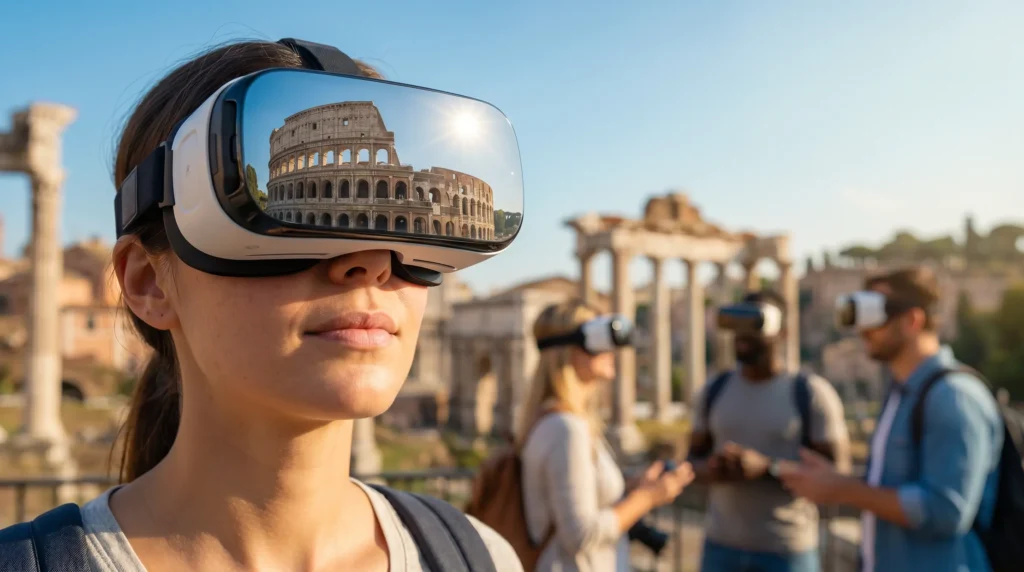
Rome VR Experience is an immersive journey through Ancient Rome developed for RomebyCart. Visitors can explore the Colosseum, Pantheon and Imperial Forums through 3D reconstructions optimized for standalone headsets, move through the environments with intuitive navigation and interact with two multilingual AI guides providing contextual explanations during the visit.

VR + REAL-TIME 3D
Medieval Italian Town
Medieval Italian Town is a real-time 3D environment built in Unreal Engine 5 to recreate the atmosphere of Italian medieval towns. Modular buildings and props, vertex painting, procedural vegetation with PCG and dynamic lighting make it possible to create credible, customizable historical scenarios ready for games, immersive experiences and interactive productions.
OUR PROCESS
From cultural content to digital experience
A clear method for turning sources, content and spaces into a coherent, testable experience ready for public use.

Materials and goals
We collect sources, surveys, references, curatorial texts, digitized materials and space constraints.

Digital reconstruction
We build and optimize environments, works and 3D assets according to the final device.

Experience design
We define the visitor journey, interactions, narrative, languages, interfaces and role of digital guides.
Prototype and validation
We test with real users and validate content, readability, interactions and performance.

Delivery and installation
We prepare the experience for headset, web, tablet, kiosk or installation and support deployment on site.
WHO WE WORK WITH
For organizations that preserve and share culture
We work with institutions, public bodies and companies that want to innovate how cultural heritage is communicated and experienced.
Museums and foundations Archaeological parks and historic sites
 Tourism boards and public administrations
 Exhibitions and cultural venues
 Tourism and hospitality operators
 Cultural agencies and producers
FAQ
Frequently asked questions about VR, AR and immersive technologies for museums
Practical answers for choosing the right technology, understanding what source materials are needed and planning an immersive cultural project.
Is virtual reality or augmented reality better?
VR works best when you want to bring visitors inside a reconstructed or inaccessible environment. AR is more effective when you want to enrich the real location with contextual information, reconstruction and digital content.
Can you reconstruct a place that no longer exists?
Yes. We can start from surveys, plans, photography, historical sources and references supplied by the client or curators. The achievable accuracy depends on source quality and should be defined before production.
Is a headset always required?
No. We can design experiences for browsers, tablets, kiosks and installations as well as VR headsets. If the content works better without a headset, we do not force one into the project.
Can virtual guides speak multiple languages?
Yes. Rome VR Experience integrates multilingual AI guides. Languages, voice, knowledge base and guide behavior are defined according to the audience and approved content.
Can we start from content that has already been digitized?
Yes. We review existing 3D models, photography, scans, video, archives and text content and decide what can be reused, optimized or reconstructed.
Can the experience work without an internet connection?
It depends on the chosen architecture. We can keep environments and content that do not require connectivity local, while separating online functions such as some AI services or remote updates.
CONTACT US
Do you have a museum, historic site or cultural experience to transform?
Tell us about your goals, available materials and visitor context. We will help determine which combination of 3D, VR, AR, AI and interaction is genuinely useful for the project.
TELL US ABOUT THE PROJECT
Complete the form and we will get back to you with an initial assessment.


