

VR safety training: costs, choices and measurable outcomes
A practical guide to planning a pilot, comparing standalone and PCVR, and measuring the task before expanding.
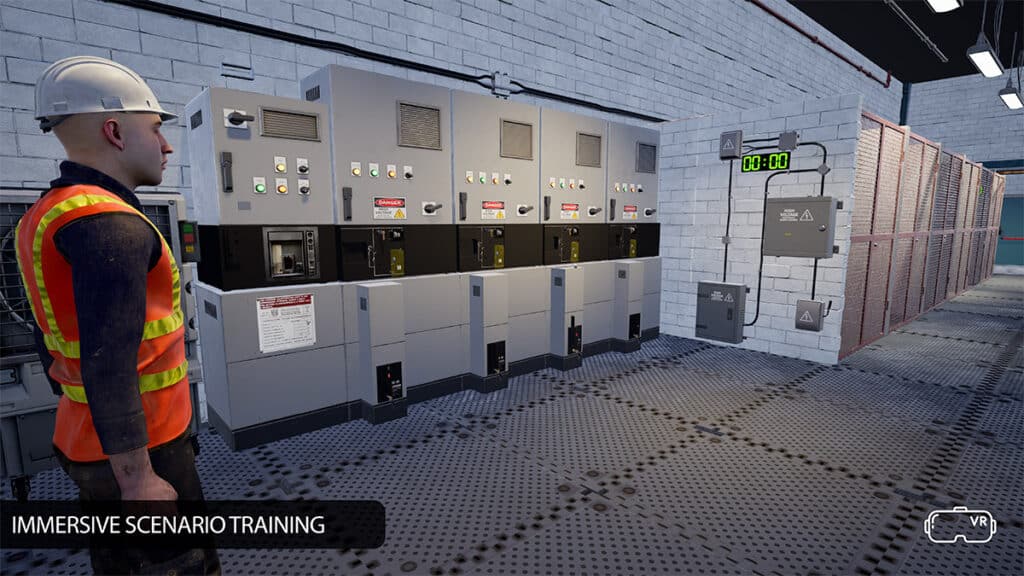
Virtual reality training makes sense when it lets people practise a decision or procedure that is difficult to repeat in the real environment. Start with an observable task: recognising a hazard, choosing equipment or following a sequence. The headset is the tool; the measure of the project is what a person can do afterwards.
Cost: what a quote should include
Cost depends on more than experience length. Separate procedure analysis, CAD and asset preparation, scenarios, interactions, feedback, assessment, languages, deployment, support and updates. Hardware and external services need separate items when excluded.
Compare offers against the same deliverable: which procedures, users and devices, with which data and checks. The corporate VR training service presents the commercial pathway; this guide helps prepare a brief.
Start with the task, then choose the headset
An unavailable plant, a hazardous condition or recurring procedural errors can justify a simulation. It needs a content owner, a verifiable sequence and an assessment criterion. If a short explanation or an on-site demonstration is sufficient, VR may add complexity.
A pilot should isolate the behaviour to practise. Visual quality should help users identify relevant components, signals, distances and consequences. An impressive environment without a clear task cannot establish whether training works.
Standalone or PCVR: an operational choice
| Decision | Standalone headset | PCVR |
|---|---|---|
| Installation | Application on the headset; plan updates and device management | Application and computer; define connection, performance and configuration |
| Scenario | Optimise geometry, materials and interactions for the chosen hardware | Assess detail and simulation requirements against the available computer |
| Sessions | Plan charging, hygiene, space and assistance | Plan workstation, space, connections and assistance |
| Selection | Test on the actual device with representative users | Test the complete workstation with representative users |
Verify the choice against the task. Headset specifications alone are insufficient: comfort, readability, session length and management across sites matter too.
Measuring a pilot
Before development, agree an initial assessment, a task, an error rubric and a follow-up assessment. Completion time alone is insufficient: someone who becomes faster by skipping a check has not improved the outcome.
Record completion, critical errors, assistance requests and ability to repeat the procedure after an agreed interval. Include preparation time, support and device downtime. Groups need comparable tasks; differences in prior experience should be documented.
Assess financial return using measured costs and benefits over the same period. Recovered hours are available capacity, not automatically revenue or cash savings. Do not attribute reductions in accidents to a pilot when the evidence cannot establish them.
What the available numbers tell us
PwC’s soft-skills training study observed shorter learning times in the VR programme examined. Its task concerned inclusive leadership: this is neither a promise of effectiveness for an industrial procedure nor a Loto Studios outcome. An enterprise pilot must generate its own evidence.
Three Loto projects with different purposes
VR training for Liceo Galileo Ferraris
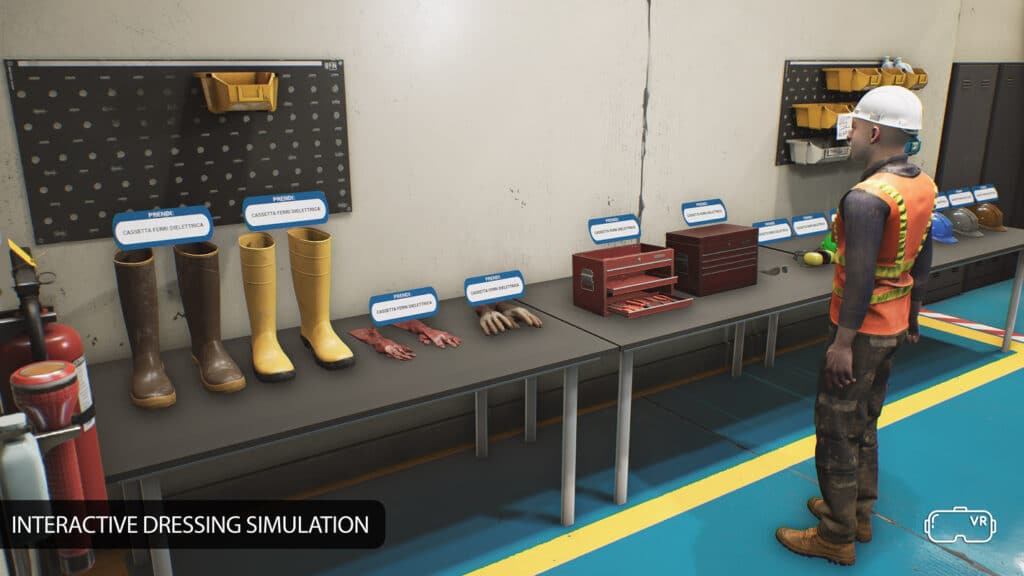
The published project includes equipment selection, technical procedures, progressive modes and session data. It is an educational implementation, not evidence of enterprise ROI or a certified safety course.
Automotive ergonomic assessment in VR
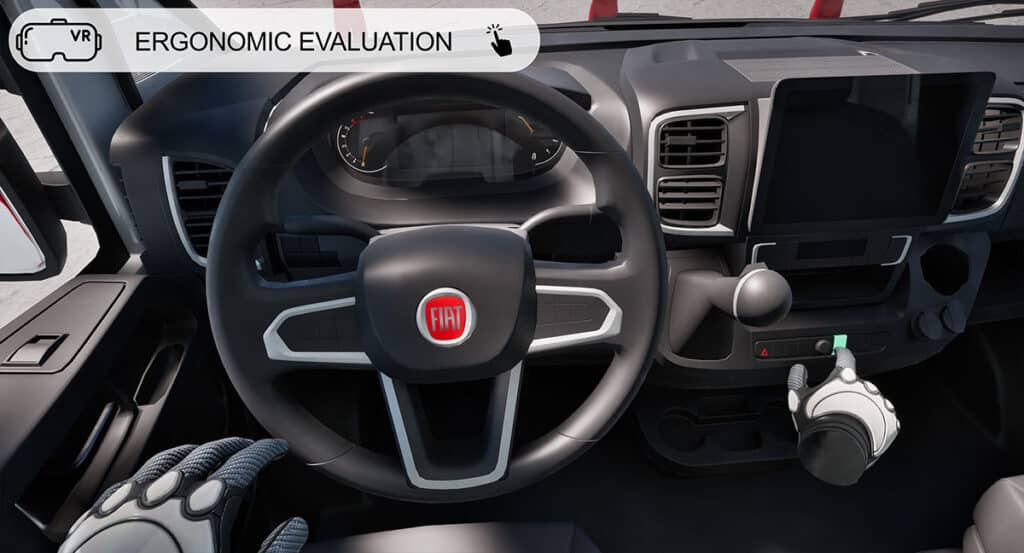
The case concerns visibility, reachability of controls and cabin assessment. It demonstrates simulation for design analysis and should not be represented as mandatory safety training.
BECOME: XR environments and biofeedback
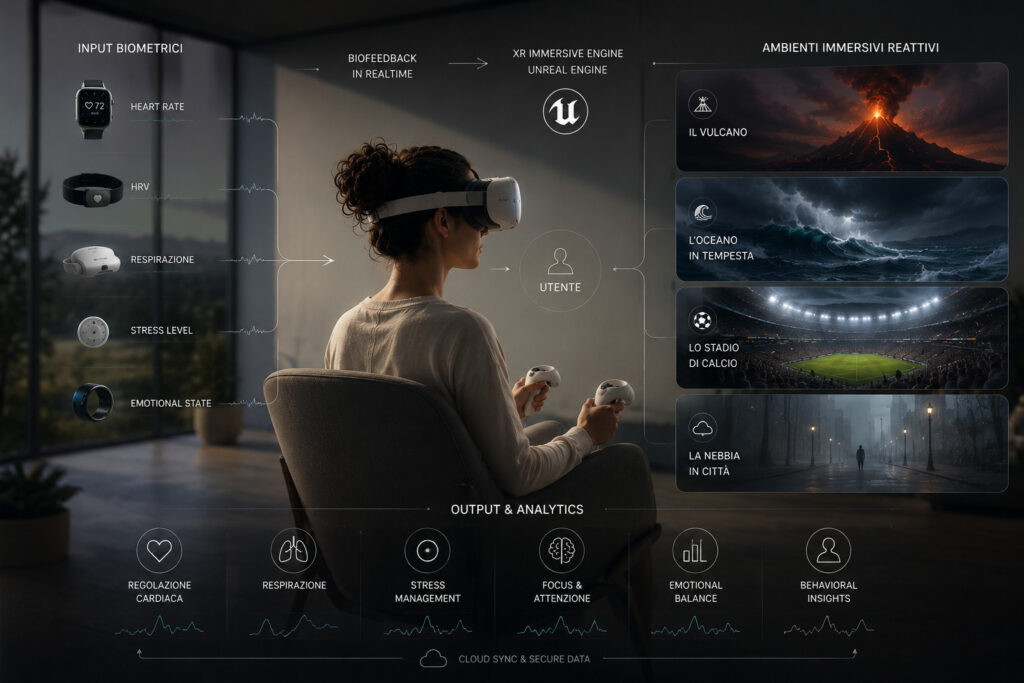
The published work combines immersive environments and physiological data for mental training and emotional regulation. It is distinct from validating safety procedures. No percentage improvement or clinical outcome is attributed.
When another tool is more appropriate
If procedures change constantly, user numbers are limited or no validation owner is available, video, operating instructions or supervised practice may be a better start. VR still requires supervision, a safe space and comfort checks.
Italian requirements: simulation and mandatory training
Italy’s State–Regions Agreement of 17 April 2025 addresses immersive technologies as teaching tools. It states that VR and AR do not replace the practical component of the courses referenced in points 7 and 8. The Ministry’s FAQs of 27 March 2026 further clarify practical training and delivery methods. Define the project with the training provider and competent company staff, checking the applicable pathway and required assessments. Software does not automatically produce a valid training certificate.
LET’S TALK ABOUT YOUR PROJECT
Which procedure would you like people to practise?
Bring the procedure, existing materials and number of participants. We can define the simulation, workplace assessment and data needed to decide whether to expand.
AN INITIAL DISCUSSION
Goals and materials before production.
We start with what you want to achieve, the available materials and your timeline to define the next steps together.
REQUEST AN INITIAL DISCUSSION
Tell us about your project.
The fields below are optional and help us tailor our first response.
Questions about a VR training pilot
Can VR replace mandatory practical training?
Not automatically: check the Agreement, pathway and required assessments with the training provider.
What does a project cost?
The quote separates scenarios, assets, interactions, devices, data, updates and validation.
How long does development take?
The schedule depends on the procedure and available materials and is defined after the brief.
Are finished CAD files required?
Existing CAD, photos, videos and instructions help assess asset preparation.
How do we measure the result?
Baseline, critical errors, assistance, completion and follow-up task assessment.
Is standalone or PCVR better?
Compare the task, performance, sites, support and management of the complete workstation.
Sources and scope
Sources checked on 27 October 2026. PwC concerns inclusive leadership; it does not validate industrial safety training. Pilot design and measurement choices in this guide are Loto analysis.
Accordo Stato-Regioni 59/CSR, 17 aprile 2025 — Parte IV, punti 2.4 e 2.5
KEEP EXPLORING
From the pilot to the right project.
SERVICE · VR
Corporate VR training
Simulate and evaluate procedures with the people responsible for training.
SERVICE · VR
VR experiences for business
Design an immersive experience around a specific task and environment.
SERVICE · VR
Virtual reality for education
Explore learning applications for schools and universities.