

Virtual Reality and the Automotive sector: a new evolution in vehicle design.
In the automotive sector, digital innovation is redefining vehicle development and design processes. Among the most advanced technologies, Virtual Reality (VR) represents a strategic tool to improve ergonomics, comfort, and functionality already in the early stages of design.
Thanks to immersive simulations and highly realistic virtual environments, designers and engineers can analyze every detail of the vehicle interior, optimize the interaction between driver and vehicle, and quickly validate design decisions. This approach helps reduce development time and costs while increasing quality, safety, and operational efficiency.
THE CHALLENGE
Improving ergonomics, accessibility, and comfort in the design of commercial vehicles.
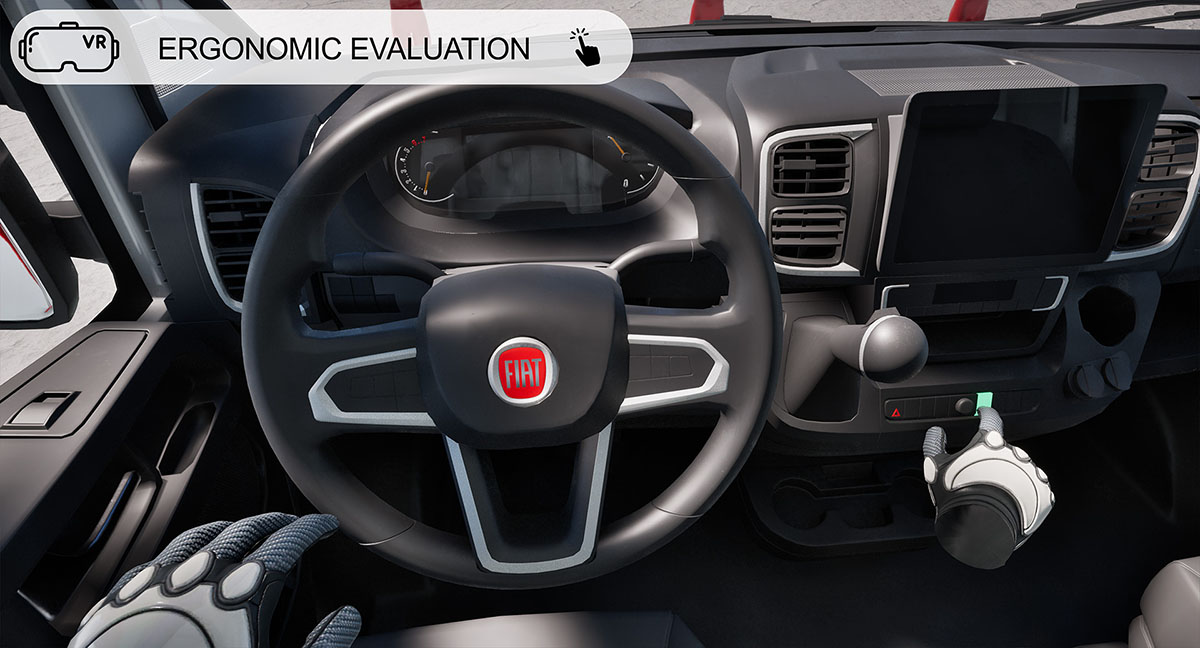
The project was born from the need to optimize the driving experience and usability of a commercial vehicle intended for different operational contexts. The main objective was to analyze and improve key aspects such as driver visibility, reachability of controls, layout of onboard instruments, and overall comfort during daily use.
In traditional automotive design processes, ergonomic evaluations are often carried out using physical prototypes, which involve long development times and limited flexibility for modifications. This makes it more difficult to promptly identify issues related to user experience and the efficiency of interior spaces.
To address these challenges, it was necessary to introduce an innovative solution capable of supporting rapid testing, realistic simulations, and detailed ergonomic evaluations in a fully digital environment.
THE SOLUTION
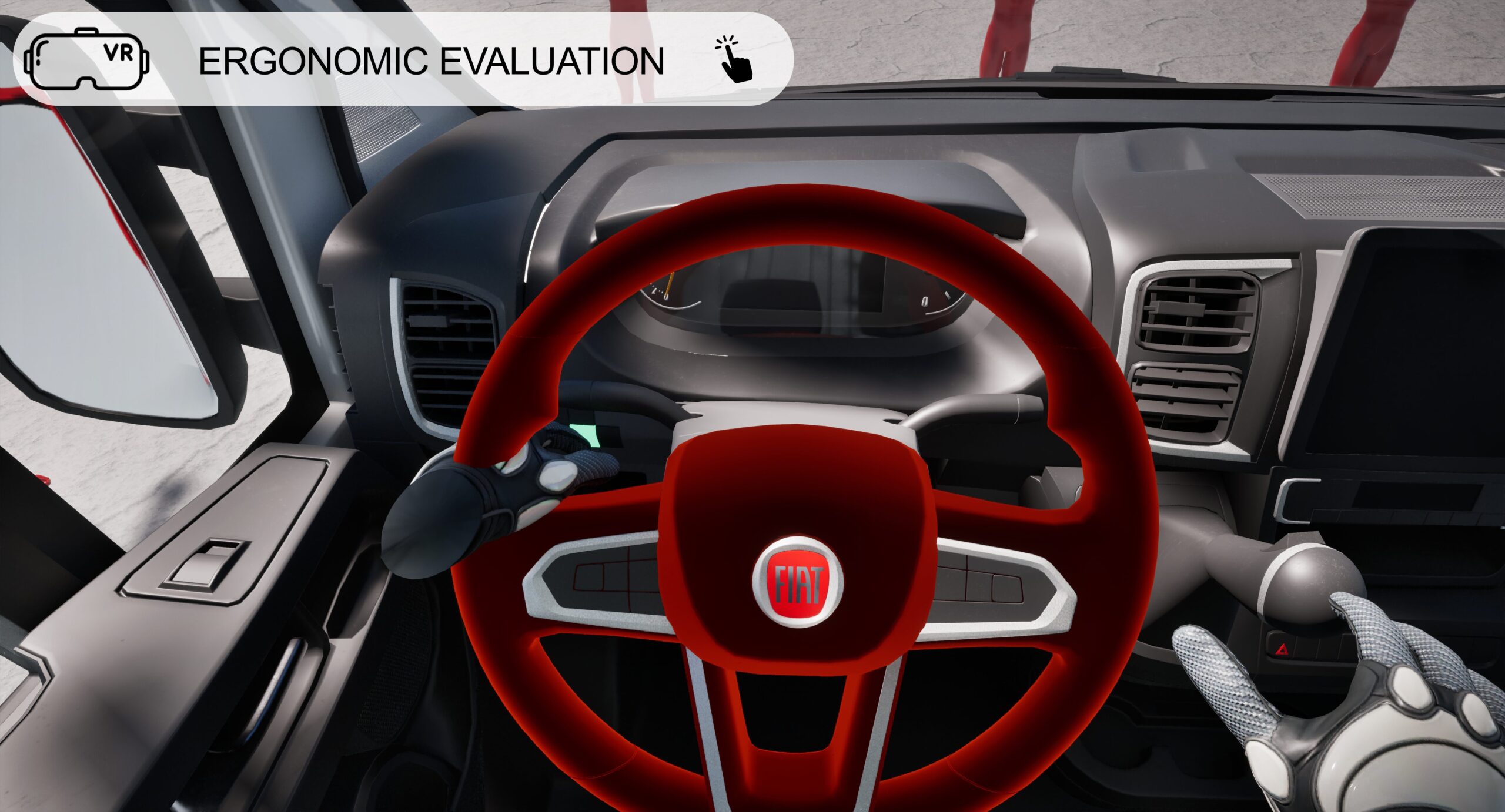
To meet these needs, the team developed an advanced application based on Virtual Reality applied to automotive design. The platform enabled the creation of realistic virtual prototypes of the vehicle and the execution of immersive simulations dedicated to the ergonomic analysis of the cabin interior.
Using VR headsets and interactive tools, designers and operators were able to explore the vehicle at full scale, checking in real time the position, accessibility, and usability of key interior elements. The immersive experience made it possible to simulate real-world usage scenarios, gather immediate feedback, and quickly optimize design configurations.
The integration of Virtual Reality into the automotive development process has improved the precision of ergonomic assessments, accelerated validation activities, and reduced the need to produce physical prototypes in the early stages of the project.
This innovative approach enables automotive companies to develop more efficient, intuitive vehicles focused on user experience, transforming traditional design into an advanced, dynamic, and highly collaborative digital process.


Book a free consultation now
and find out how our 3D studio can bring your
your project!