
Meta Muse Spark Open: an AI model your company can keep in-house
One week after launch: what the licence allows, what hardware it really needs and when it makes sense for a smaller company.

What was released, in facts.
Muse Spark Open is a very large model: 816 billion parameters, about 42 billion active per answer (a “mixture of experts” architecture). It reads up to 1 million tokens of context: whole manuals, contracts or catalogues at once. It takes text, images, video and audio as input and answers in text; it was trained on data in more than 100 languages.
The weights can be downloaded from Hugging Face, and the model is also available on the main clouds, including Amazon SageMaker and Google Cloud, and from European providers. According to Meta, the compressed version also runs on two high-end Mac Studios. Source: Meta announcement.
The licence: “open” does not mean “no rules”.
The Muse Model License allows free use, modification and adaptation of the model. Three points are worth reading before you start.
| Point | What the licence says | What it means for a smaller company |
|---|---|---|
| Mandatory label | Every product that uses the model shows “Built with Muse Spark Open” in its interface, documentation or website. | Plan for it from the start, like a logo or a legal note. |
| USD 20 million threshold | A separate agreement with Meta only applies to those who offer access to the model as a service to third parties above USD 20 million in revenue over 12 months. | Internal use or use inside your own product is not covered: in practice it is not a limit. |
| Usage rules | Some uses are forbidden (illegal activity, malware, weapons) and the model is not intended for minors. | You need clear rules on who uses the assistant and for what. |
For companies in Europe the context matters too: Meta opened this model while keeping its most powerful one closed, a choice the industry press reads in light of the European AI rules (The Next Web, i-SCOOP).
What changes for a company: where the data lives.
The real point is not the model itself, but where the data lives. With an open model, contracts, technical sheets and price lists can stay on the company’s servers or on a European cloud of its choice.
This helps with GDPR and prepares better for the AI Act transparency duties: telling people when they talk to an AI and labelling generated content.
Before choosing the model, we look at which documents are really needed, who updates them and who must be able to consult them.

When keeping it in-house makes sense, and when it does not.
It makes sense if the company has very high volumes, data that cannot leave and an IT team able to run GPU servers and updates.
It does not if you need reliable answers on a few processes: buying and running 700 GB of GPU memory costs far more than a ready-made assistant, connected to your documents and with controls in place.
Early independent tests show the model is strong at agents and tool use, less so at coding (TechRepublic, MindStudio).
Three business cases, from task to test.
These examples are project hypotheses: for each one we clarify the task, the data and how to measure whether it works.
1. Customer support on manuals
A customer asks how to assemble or adjust a product and gets the answer taken from the right manual.
Data: approved manuals, versions, product sheets.
Test: we compare time and accuracy with the answers staff give today.
2. Quotes from price lists and sheets
A salesperson prepares a first offer from price lists, variants and compatibility rules.
Data: updated price list, variant rules, commercial terms.
Test: we check how many offers come out right the first time.
3. Confidential documents kept in-house
A technical office consults contracts and specifications that cannot leave the company.
Data: document archive, permissions per person, log of questions.
Test: we check that everyone sees only what they are allowed to and that answers cite the source.
What to do now: three steps.
- Pick 2-3 processes where AI saves measurable time: customer support, quotes, technical manuals.
- Put your documents in order: an assistant is only as good as the approved content it works on.
- Start with a pilot on one task, measure it, then decide whether you need an in-house model or a ready-made assistant is enough.
At Loto Studios we design company AI assistants connected to your own documents, including 3D avatars and voice, and interactive applications that bring them in front of your customers. For more context on AI news, read Gemini 4 Argon for business.
LET’S TALK ABOUT YOUR PROJECT
Which process would you hand over to an AI assistant?
Bring us a real process and an example of the documents it relies on: manuals, price lists, technical sheets. Together, we define a pilot on one task, where the data should live and the criteria for deciding the next step.
AN INITIAL DISCUSSION
Goals and materials before production.
We start with what you want to achieve, the available materials and your timeline to define the next steps together.
REQUEST AN INITIAL DISCUSSION
Tell us about your project.
The fields below are optional and help us tailor our first response.
Questions about Muse Spark Open and AI in business.
Is Muse Spark Open free?
Yes, the licence is free. The real costs are the hardware or cloud it runs on and the work to connect it to your processes.
Do I need a dedicated server?
To run it in-house, yes: at least 700 GB of GPU memory according to the official card. Otherwise you can use it through the clouds that offer it.
Is it open source?
No. It is an open-weight model with its own licence and some conditions: a mandatory label and a threshold for resellers.
Does it speak Italian?
It was trained on more than 100 languages, Italian included. Test it on your own texts before using it with customers.
Can I use it in my product without an agreement with Meta?
Yes, unless you sell access to the model as a service above USD 20 million in annual revenue. The label is still required.
Where should a company start?
With a single process whose documents are already in order: a measurable pilot tells you whether you need an in-house model or a ready-made assistant is enough.
Sources and update
Facts checked on 23 October 2026. Commercial details are reported “according to Meta”; USD-EUR rate from the ECB on 15/10/2026 (1.1208).
KEEP EXPLORING
From a model to a useful project.
Loto services to bring AI into your processes and in front of your customers, with your company’s data.
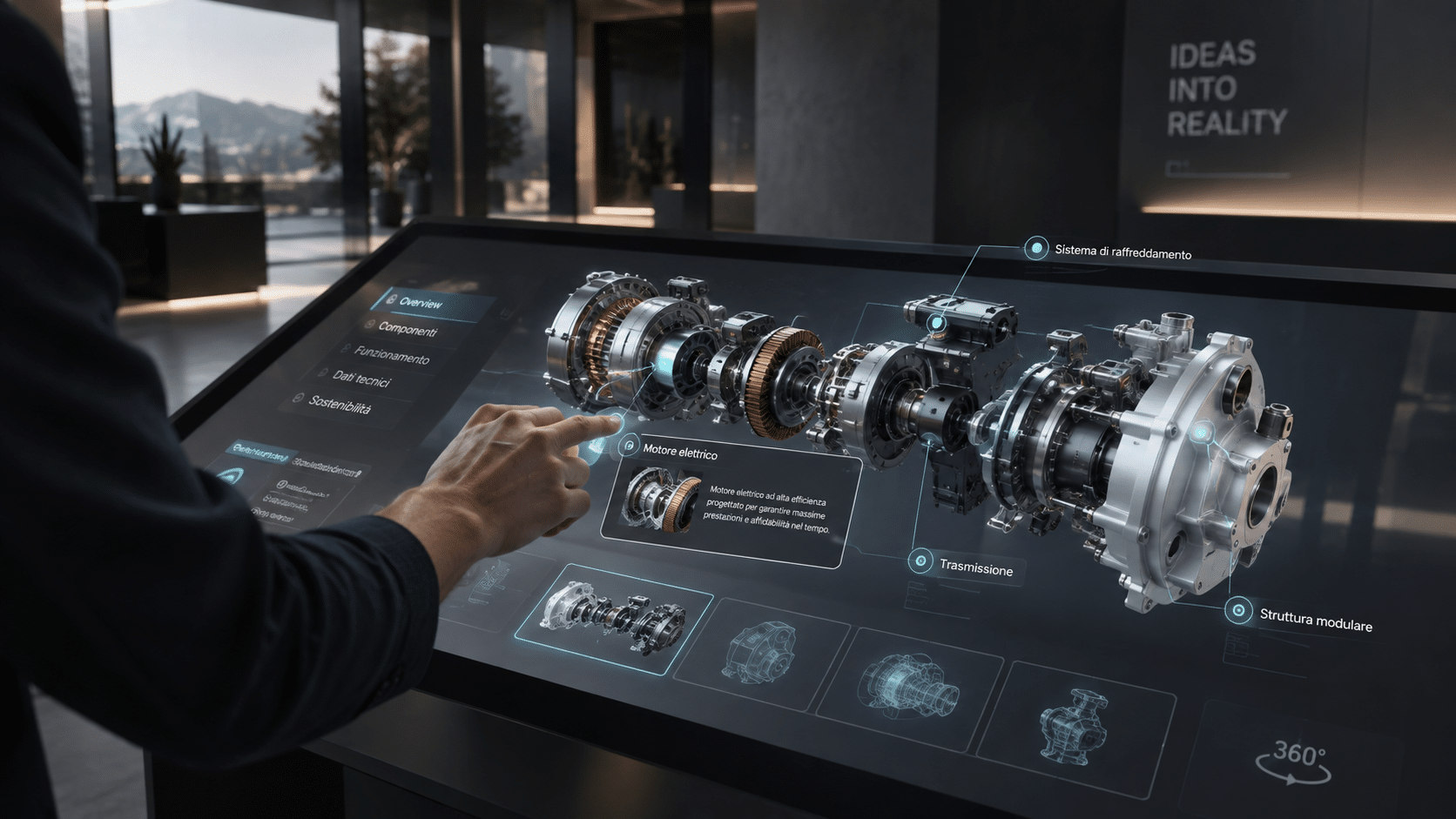
SERVICE · INTERACTIVE
Interactive applications and interfaces
From user behaviour to a clear digital experience, connected to company data.
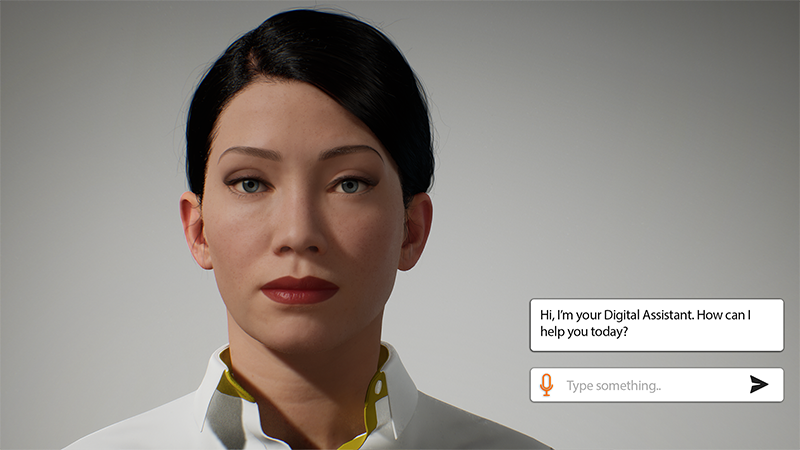
SERVICE · AVATAR
Digital humans and 3D avatars
A face and a voice for your AI assistant, on websites, kiosks and events.

SERVICE · AI
AI content for business
Production and management of visual content with AI, inside a controlled workflow.