
Industrial digital twins: data, 3D and simulation
A digital twin is useful when it supports a decision, not merely when it displays a plant in 3D. Here is how to define data, updates and acceptance criteria before starting a project.
Tell us about your plant →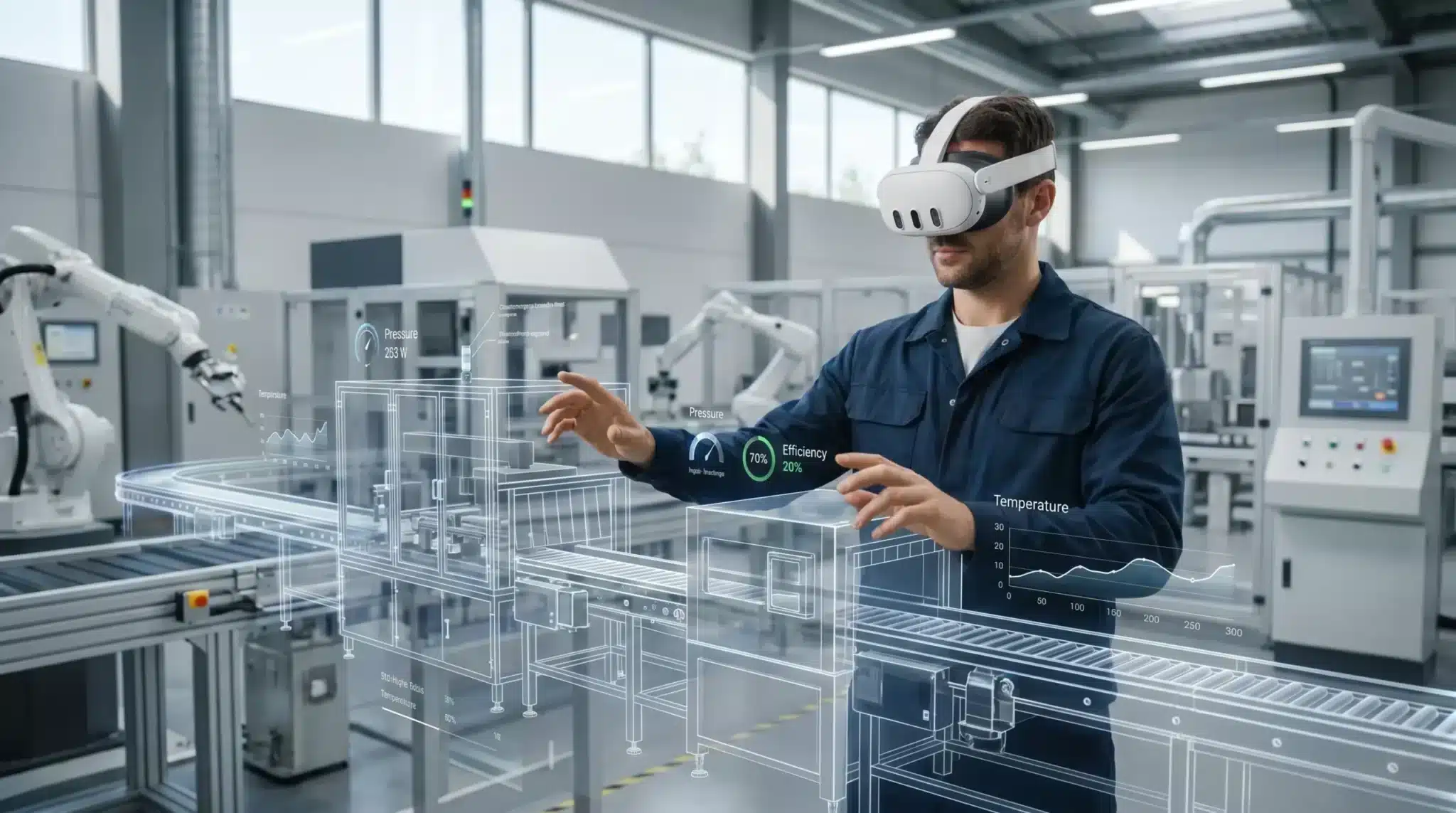
Which decision should the digital twin support?
The starting point is not the headset. It is an operational question: which component is involved in an anomaly? How is a procedure performed? What information is needed to compare two scenarios? An initial project should select one of these questions, a specific audience and an observable outcome.
The Digital Twin Consortium describes digital twins through a representation of the real system and synchronization at a defined frequency and fidelity. In practice, a navigable model does not prove that its displayed state is up to date. The project needs to explain what is represented, where the data comes from and which point in time it describes.
3D model, simulation and digital twin: what changes
These elements can work together, but they are not synonyms. Graphics make shapes and relationships understandable; simulation calculates or represents behaviour under stated assumptions; synchronization maintains a defined relationship with the real system.
A demonstrator may start with recorded or synthetic data. It must be labelled accordingly: even a realistic simulated value should not appear to be a current measurement from the plant.
| Component | What it enables | What to verify |
|---|---|---|
| Visual model | Explore components and spatial relationships | Geometry, identifiers and readability |
| Simulation | Test behaviour under stated assumptions | Inputs, rules, limitations and technical validation |
| Synchronized representation | Link represented state to the real system | Source, frequency, fidelity and missing-data handling |
From CAD to identifiable components
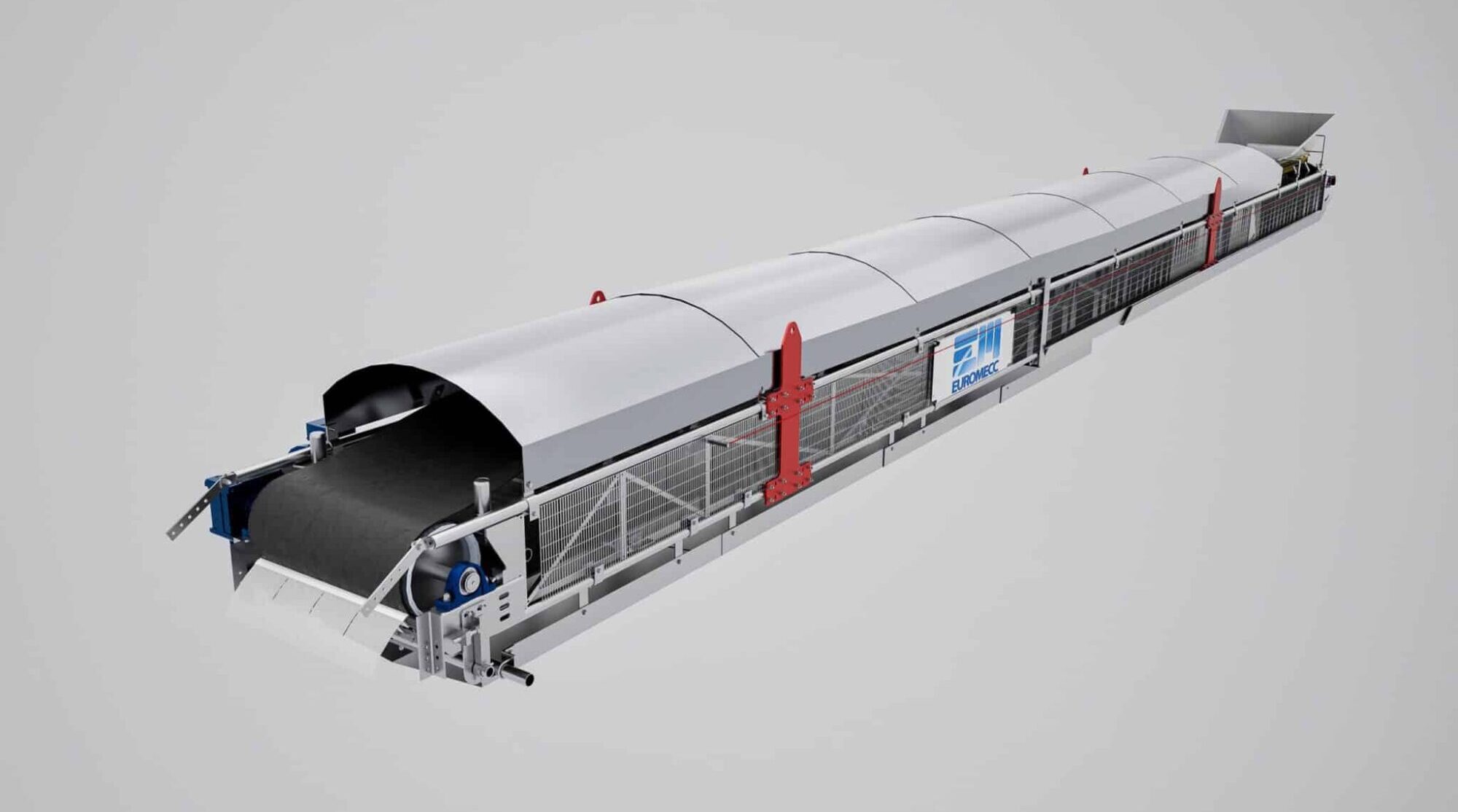
Reusing CAD or BIM can avoid rebuilding geometry from scratch, but technical files need preparation for the final experience. Hierarchies, identifiers and levels of detail must fit the user’s task. A screw does not need the same modelling detail as a valve if that detail does not support the decision.
The model also needs optimization for desktop, tablet or headset. Separating selectable components, identifiers and geometry allows information to be linked without relying only on a visible name. Surveying or Gaussian splatting can help reconstruct a space: neither alone demonstrates data integration or simulation validity.
Data sources, frequency and responsibility
Agree a small data contract before designing the interface. Asset identifiers, source, units and timestamps need to be readable and verifiable. Update frequency depends on the use case: real time is not always necessary.
If the flow stops, the experience must distinguish the last valid reading from a current state. Data-quality ownership, access and approval of changes also need to be clear. NIST IR 8356 discusses security and trust in digital twins; it is not a certification of a project or supplier.
| Field | Initial question | Acceptance evidence |
|---|---|---|
| Asset | Which component does it represent? | Unique identifier traceable to the source |
| Source | Where does the value come from? | Recognizable source and units |
| Timestamp | Which point in time does it describe? | Explicit time and historical/current status |
| Frequency | When should it update? | Observed updates for the agreed use case |
| Interruption | What happens without data? | Stale reading flagged, not simulated as current |
| Owner | Who confirms correctness? | Agreed responsible person and acceptance criterion |
What it means to simulate a scenario
Simulation requires explicit assumptions, identifiable inputs and comparison with the behaviour it aims to represent. Useful accuracy depends on the question: understanding an operational sequence differs from predicting the physical response of a component.
Illustrative example, not a customer case: a maintenance worker selects a motor, checks historical readings and rehearses a guided procedure. This may help explain the operation, but it does not demonstrate predictive maintenance. Predicting a failure requires specific data and models, validation with technical specialists and an assessment of uncertainty.
Where virtual reality helps the work
VR is one possible interface: it lets users inspect spatial relationships, reach otherwise difficult viewpoints or rehearse a procedure in a reconstructed environment. A desktop application may be sufficient, and easier to distribute, for checking values or comparing records.
Choose the device after defining users, duration and context. A training experience can use a realistic reconstruction without being an operational digital twin. Likewise, a twin can exist without a headset: the defining feature is a verifiable relationship between representation, data and the real system.
Virtual reality applications for business · Corporate VR training
A first scope that can be verified
We suggest starting with one asset or process, one decision and one user group. Before producing the graphics, gather the available files and agree which sources can be used with the responsible teams. A representative sample lets the workflow be tested without promising the whole plant immediately.
Acceptance separates four aspects: component recognition, correspondence between data and source, users’ understanding of the task and performance on the selected device. Example tests include selecting the correct asset, displaying a value’s source and time, flagging stale data and completing the intended procedure. Thresholds and responsibilities are agreed for the project, not invented afterwards.
What to prepare for an initial discussion
Bring a concrete objective, available CAD/BIM files or surveys, an example of the data sources, their update process and access constraints. Also identify users, devices, the technical contact and who approves the outcome.
Loto Studios can help define the 3D representation and interactive workflow. Integrations and simulations need assessment against the assets and systems actually available. Explore immersive digital twins for the service, or corporate VR training for a project focused on procedures.
Industrial digital twin FAQs
How does it differ from a 3D model?
A 3D model represents geometry. A digital twin also requires a defined and verifiable relationship with a real entity or process, including its synchronization mechanism. Visual realism alone is not enough.
Does the connection always need to be real time?
No. Frequency and fidelity must fit the use case. Periodic updates may be sufficient if timestamps and the limits of the displayed state are clear.
Can CAD and BIM be reused?
Yes, when available and usable for the project. They often need optimization, organized hierarchies and preservation of the identifiers needed for linked information.
Is a VR headset required?
No. Desktop and tablet may suit information access better. VR is chosen when spatial presence and interaction add practical value to the task.
Can a simulation predict failures?
Not automatically. A guided sequence is not a predictive model. Prediction requires relevant data, a suitable model and technical validation of results and uncertainty.
What should be prepared for an initial discussion?
The objective, available assets, a sample of data sources, update frequency, users, devices and responsible contacts. These define a first scope that can be verified.
Sources and reading criteria
Digital Twin Consortium · definition and synchronization · DTC Glossary · NIST IR 8356 · Security and Trust Considerations for Digital Twin Technology
The sources support definitions and general criteria; they do not certify Loto solutions or demonstrate financial outcomes. The examples and initial-scope criteria in this guide are editorial proposals, not measured customer results.