INSIGHT · GAUSSIAN SPLATTING
Gaussian splatting for business: from smartphone capture to a navigable 3D scene
A real environment can become a scene that people explore from several viewpoints. For a business, its value emerges when the capture helps someone understand a space, consult information or prepare a visit. Here is how to choose between a browser, Unreal and a traditional 3D model.
DISCUSS YOUR PROJECT →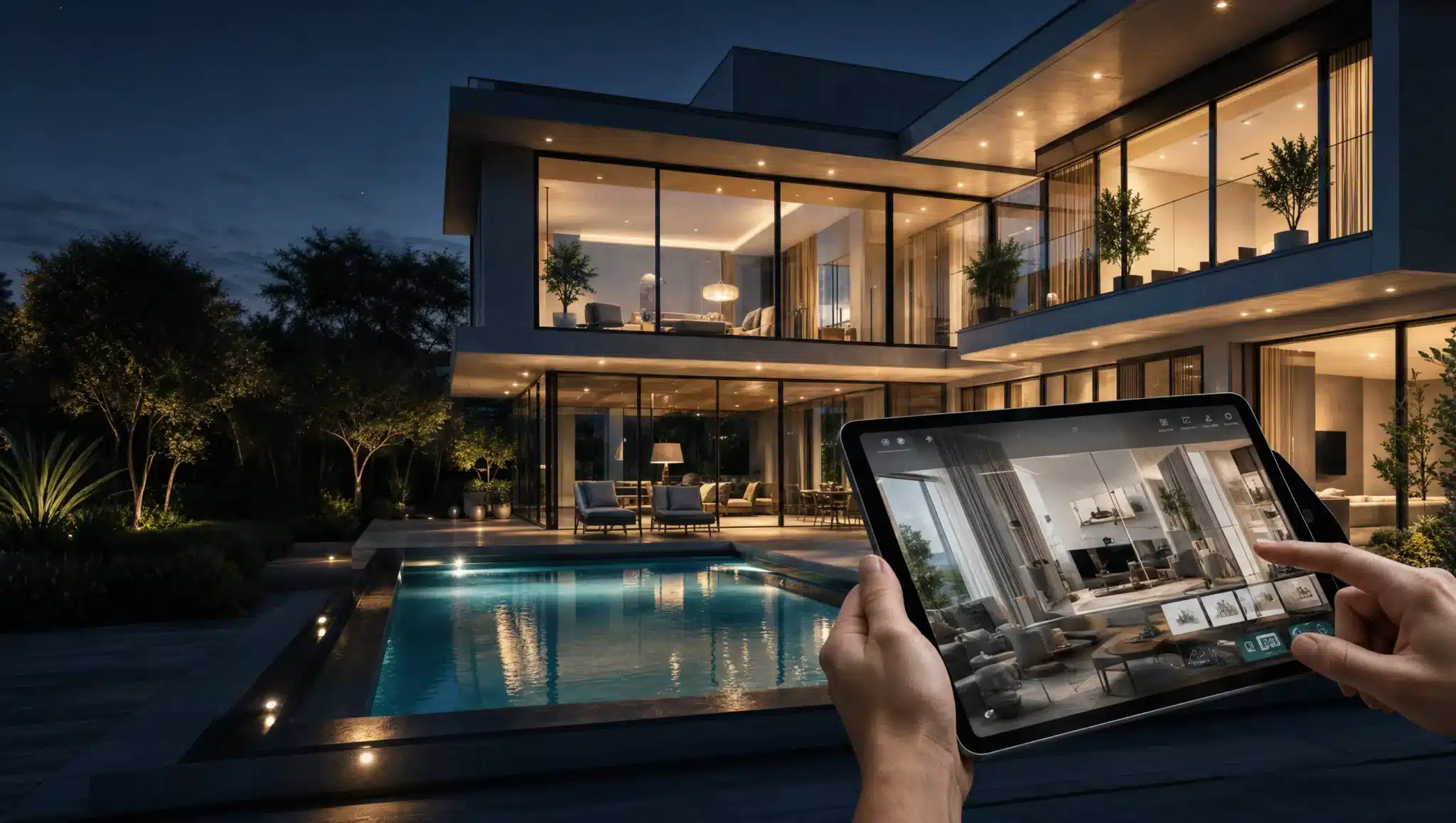
Illustration of a visualisation context from the Loto Studios website; this is not a Gaussian splatting capture.
A visual reconstruction, first of all.
Gaussian splatting represents a scene with three-dimensional elements that contribute to its appearance as the viewpoint changes. In the original method, photographs and camera positions help reconstruct a representation that can produce new views. The result can preserve details and the atmosphere of the captured environment without building every surface as a mesh. Original INRIA research.
The practical difference from a panoramic photograph is movement of the viewpoint: a visitor can explore a portion of the reconstructed space. The difference from a CAD model is equally important: a convincing visual result does not mean that every object has certified dimensions, separate parts or operating rules. The project must distinguish what people can see from what they can measure or simulate.
For example, a showroom may need a route with information points and a visual appearance consistent with its installation. Machine maintenance may instead need identifiable components, collisions and instructions connected to current data. These are different requirements, even when the opening of the experience looks similar.
From video to scene: quality starts during capture.
The pipeline includes capture, camera estimation, reconstruction and preparation of the scene for its renderer. Uploading a film to a viewer is not enough: reconstruction tools and publishing tools have distinct roles. Pipeline documented by PlayCanvas.
A sharp sequence with sufficient coverage and overlap makes later work easier. Changes in lighting, moving people, reflections and transparent surfaces can complicate reconstruction. Areas that were not captured remain something to check in the result. Capture guide.
Before entering a shop or facility, it helps to define the capture route, the spaces to cover and what needs to stay outside the material. Signs, documents, screens and people visible in the images should be considered in the capture plan. This gives the useful project material a clear scope from the start.
After reconstruction, the scene is checked for gaps, floating elements, unstable edges and unnecessary backgrounds. Cleanup also reduces what the visitor should not see or load. A convincing preview from a single camera does not replace a check along the actual route. Scene editing.
Four applications to design around a task.
Showrooms and shops
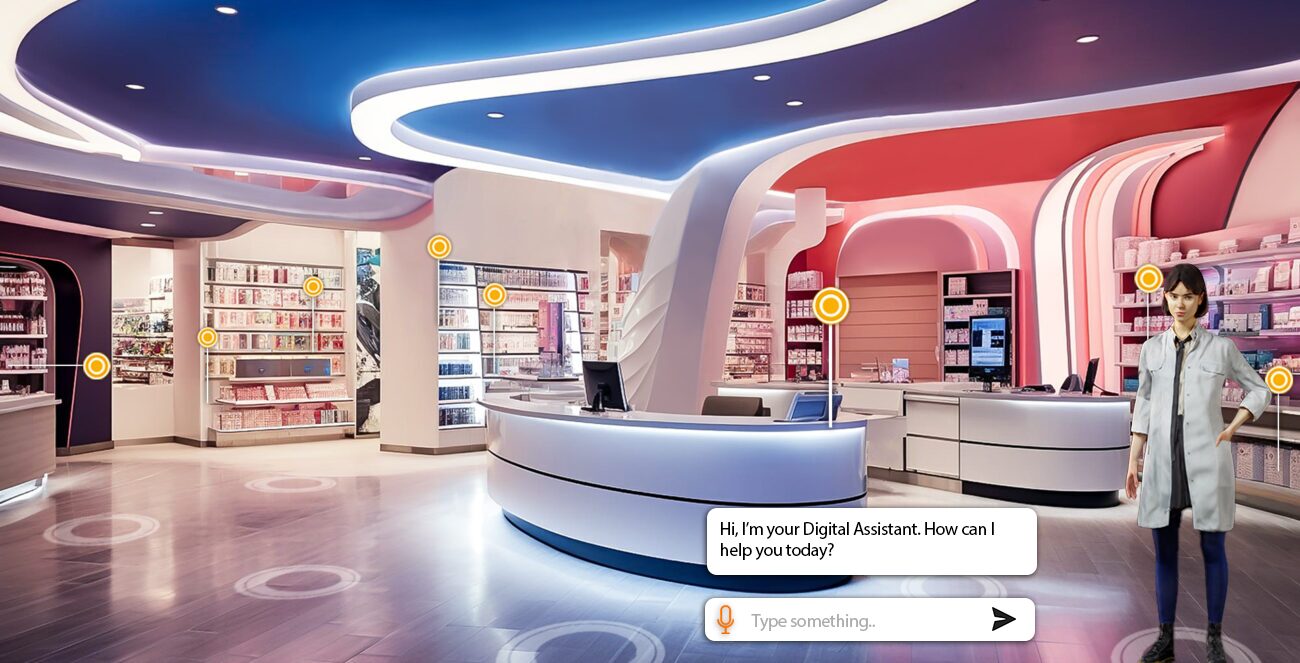
The visitor explores the environment and opens information about areas or products. The capture preserves the context, while hotspots link to information that can be managed separately: updating a description should not require rebuilding the entire scene. The project must define the transition from exploration to a commercial enquiry and check that important points remain readable on a phone.
Properties and construction sites
A scene can support a preliminary visit or a comparison between stages of work. Useful comparisons over time need consistent capture criteria and version management. When the task involves measurements or technical checks, an appropriate geometric method is also selected: the realism of an image does not certify the accuracy of the survey.
Facilities and digital twins
The visual context can help someone locate an area, open a record or prepare an activity. Representing the operational state also requires asset identities, data sources and update rules. A navigable scene is one possible component of a digital twin, rather than the entire system. Explore immersive digital twins (Italian page).
Museums and cultural spaces
A route can connect an environment to explanations and accessible content. For an object that needs to be viewed from every side, moved or manipulated, capture coverage and the type of representation become decisive. Both the visitor route and the information route should remain understandable to people who are unfamiliar with 3D controls.
These are project scenarios to evaluate, rather than results attributed to clients or completed projects.
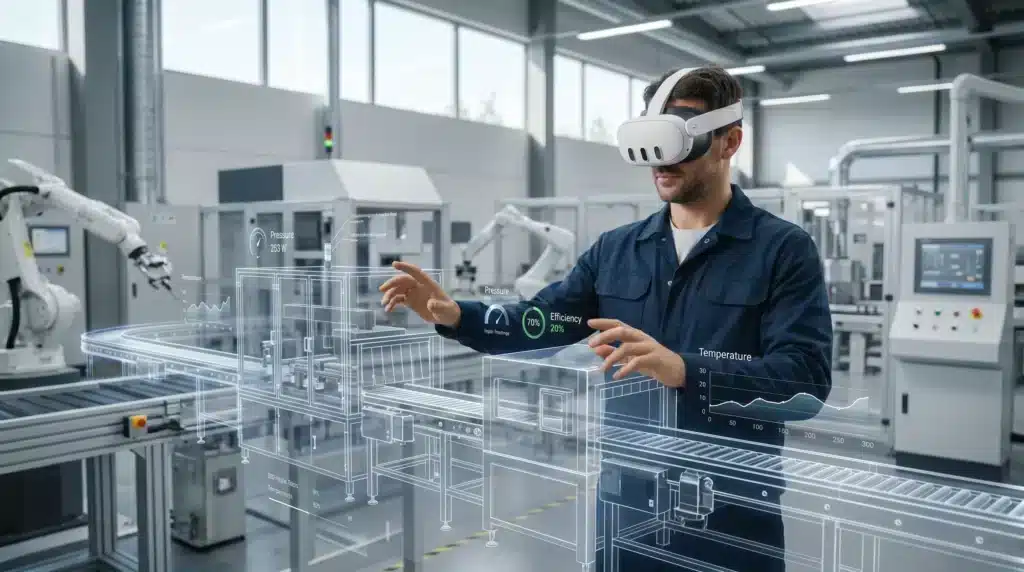
Browser or Unreal: the delivery changes, as well as the renderer.
A browser is an option when the experience needs to open from a link and integrate with web pages and content. SuperSplat exports distinguish scene data from viewable packages such as HTML or ZIP. An arbitrary PLY file is not automatically a compatible Gaussian PLY. Formats and exports.
Specific options exist for Unreal. The NanoGS README lists support for UE5.6 and UE5.7, PLY import, detail management and culling; it also notes possible TSR artefacts. Luma documents an experimental plugin for .luma scenes and Gaussian .ply. These are routes to test with the chosen version and device, rather than universal compatibility or Loto benchmarks. NanoGS, the author’s source; official Luma plugin.
A dedicated workstation, an event scene and a public web page have different constraints. Opening and loading, input, updates, integrations and support arrangements all inform the choice. The first trial should reproduce that context: a video from the editor alone does not demonstrate the quality of the final experience.
When a traditional 3D model is still needed.
If the task requires changing materials, configuring variants, animating parts or simulating behaviour, a geometric model can remain central to the project. A solution can combine a capture of the surroundings with purpose-built meshes and interfaces. Each component is assigned the work it needs to perform, rather than asking one representation to cover every requirement.
Lighting and performance also depend on the pipeline. Many scenes preserve the appearance of the captured lighting; relighting techniques exist and bring additional requirements. It is inaccurate to promise that a capture will behave like any traditional surface under every light. Relighting in PlayCanvas.
The number of elements, their sorting and the screen area they cover affect rendering. Reduction, partitioning and levels of detail are evaluated on the actual scene. Smooth performance cannot be guaranteed simply from the name of the technology. Performance and factors to check.
A useful trial has acceptance criteria.
Before full production, we select a limited space, the device and the visitor’s task. Checks include loading, navigation, coverage of important areas, readability of information points and returning to the main route. For performance, the scene, settings and test device are recorded so the result can be compared.
A second group of criteria concerns maintenance: how a record is corrected, who updates the data and when a new capture is needed. A project designed to support a sale should also include a route to consultation or an enquiry. Its technical and commercial paths should be designed together.
A workflow to evaluate with Loto Studios.
We start with the objective and available material. We define the space and capture route, assess the capture, prepare the scene and integrate the necessary content and interactions. Testing on the chosen channel comes before delivery of the experience. If the task needs editable geometry or simulations, we define which parts to build through a traditional 3D pipeline.
Tell us where the experience needs to run, who will use it and what information it should make accessible. These details help us evaluate the project and the actual role of Gaussian splatting. Interactive applications and interfaces; visualisation for architecture and real estate.
Frequently asked questions.
Is a smartphone enough?
It can be a capture tool, but the result depends on coverage, image quality, the scene and the pipeline. A sample is evaluated before extending the capture.
Is it a digital twin?
It is one possible visual representation. An operational digital twin also needs data, asset identities and behaviour consistent with its intended use.
Can products be updated without repeating the capture?
Linked information can be managed separately. If the captured environment changes, the scene may instead need an update or replacement.
Does it work on every phone?
It needs to be tested on the selected devices with the scene and delivery settings. A demo working on a computer does not demonstrate that it works on a phone.
Can it be used to measure a space?
Accuracy needs to be checked with a method suited to the task. Visual fidelity alone is not a metric certification.
What material is needed to start?
The objective, space to capture, access constraints, available photographs or video, devices, interactions and data sources to connect.
Let us evaluate your space and the visitor’s task.
Tell us about the environment, available material, devices and information to connect. We will define a trial with clear criteria.
Tell us about the project.
Describe the objective, available materials and project timeline.
Keep exploring.
Sources and updates
Primary sources checked on October 15, 2026. Compatibility and availability can change: the official guides remain the operational reference.